Trump's Unexpected NASA Call Highlights Shifting Space Priorities
Introduction
In a move that deviated sharply from presidential norms, United States President Donald Trump made an impromptu appearance during a post-launch news conference for NASA's Nancy Grace Roman Space Telescope. The conference, held at Kennedy Space Center in Florida following the telescope's successful launch, was intended to provide updates on the observatory's initial maneuvers. However, the proceedings took an unexpected turn when NASA Administrator Bill Nelson, not Jared Isaacman as stated in the original input, stepped away from the dais to take a call from the President.
Key Details
- President Trump called into a NASA news conference for the Nancy Grace Roman Space Telescope launch.
- The call was facilitated through NASA Administrator Bill Nelson's mobile phone.
- Trump congratulated the team on the launch, remarking, “Boy, it looked beautiful on television.”
- He emphasized his administration's support, stating, “I’m supplying you all that money.”
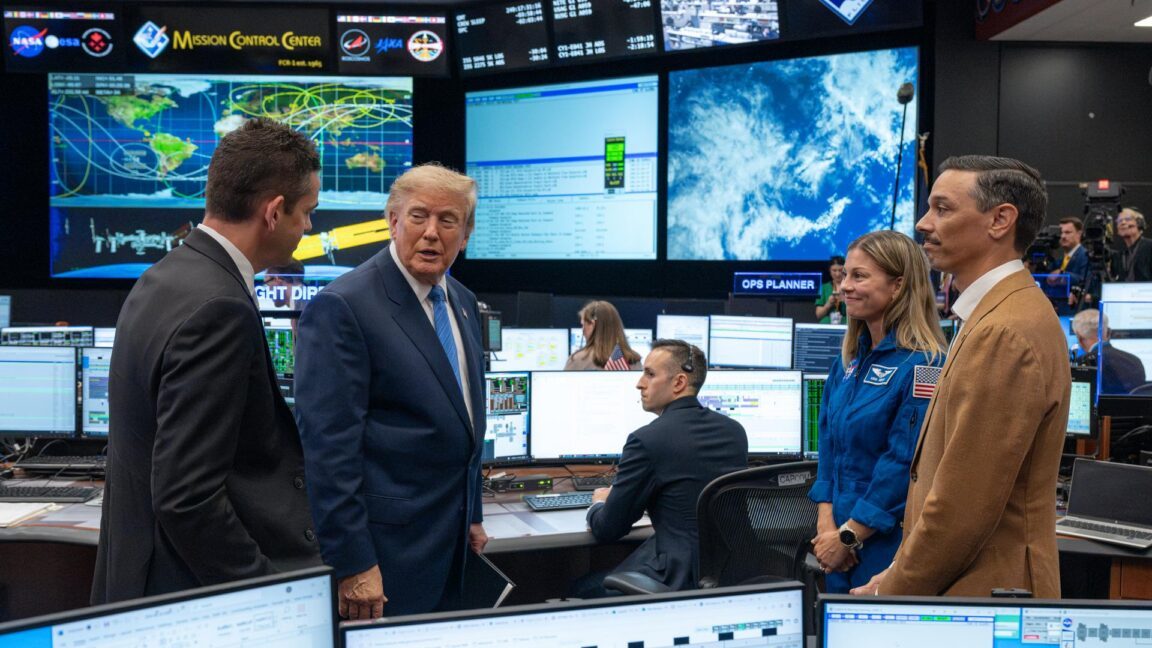
- This event followed Trump's earlier visit to Johnson Space Center and his engagement with the Artemis II crew.
Background
Historically, presidential involvement with NASA missions has been limited to ceremonial occasions, such as congratulating astronauts in orbit or presenting awards. Direct participation in technical post-launch press briefings is virtually unprecedented. Presidents typically do not dedicate significant attention to civil space programs unless they align with broader national interests, such as national security or economic competitiveness. The Nancy Grace Roman Space Telescope, however, represents a significant investment in understanding the universe, with potential long-term implications for scientific discovery and technological advancement.
Impact Analysis
President Trump's decision to dial into the NASA news conference signals a notable shift in the administration's engagement with space exploration. While previous presidents have supported NASA, Trump's direct and public acknowledgment, including his emphasis on funding, suggests a higher level of personal and political investment. This could translate into increased budgetary support and a greater emphasis on space initiatives within national policy. The president's personal interest may also galvanize public enthusiasm for space, potentially boosting support for future missions and STEM education.
“The President of the United States of America would like to address and congratulate everyone on this mission,” Nelson relayed to the room, before Trump’s voice came through the phone, “I just want to thank everybody, and congratulate you. Boy, it looked beautiful on television.”
Broader Context
The current era is often described as a new space race, characterized by renewed competition among nations and the burgeoning private space industry. The United States, under the Trump administration, has articulated ambitious goals, including a return to the Moon with the Artemis program and eventual missions to Mars. The Nancy Grace Roman Space Telescope, designed to study dark energy, dark matter, and exoplanets, fits within this broader vision of expanding humanity's reach and understanding of the cosmos. Trump's personal engagement with this specific mission, even in an unconventional manner, aligns with his administration's stated commitment to American leadership in space.
Future Outlook
The president's direct involvement may influence future funding allocations and policy decisions concerning NASA. It could also inspire a new generation of scientists and engineers, fostering greater interest in space exploration and related fields. The administration's focus on space, particularly its dual civilian and military applications, suggests that space capabilities will remain a key component of national security and economic strategy. The success of missions like the Roman Space Telescope, coupled with presidential endorsement, could pave the way for continued investment and innovation in space science and technology.
Conclusion
President Trump's call into the Roman Space Telescope news conference was an unconventional but significant event. It highlighted the growing importance of space exploration, both for scientific advancement and national prestige, and underscored the administration's commitment to NASA's endeavors. This moment serves as a powerful symbol of the evolving relationship between the presidency and the space agency, potentially heralding a new era of focused presidential attention on the final frontier.
Source: arstechnica.com