Tibetan Heat Spikes Linked to 56% of California's 2017 Extreme Rainfall
Introduction
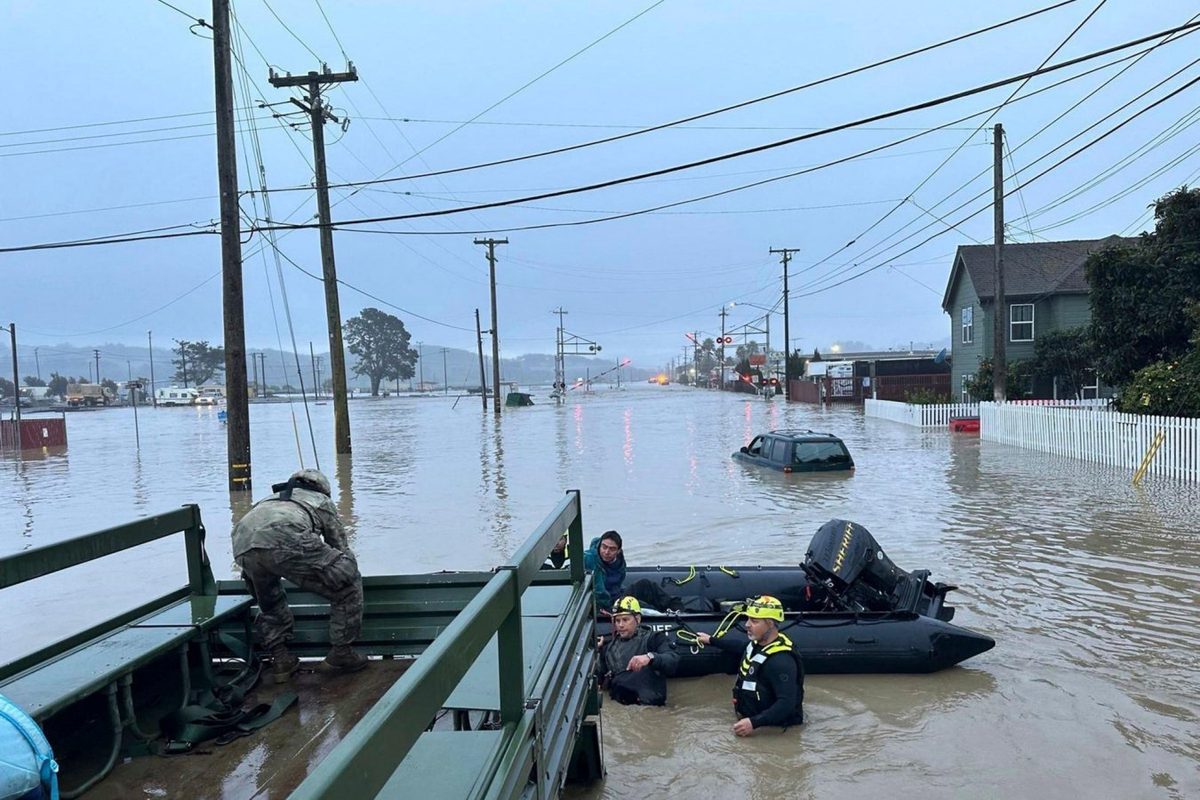
California, a state often associated with drought, has also experienced devastating floods. In January 2017, the state recorded its wettest winter on record, leading to widespread inundation, damaged infrastructure, and power outages affecting over half a million people. This extreme event puzzled scientists as it occurred during a weak La Niña phase, a period typically associated with drier conditions in California. The anomaly repeated itself between December 2022 and March 2023, when another La Niña event coincided with torrential rains across the state. This persistent inversion of expected weather patterns has long baffled researchers.
Key Details
- A new study published in Science Advances suggests that unusually warm weather on the Tibetan plateau is a significant factor in California's extreme winter rainfall.
- Researchers used climate models to simulate the impact of record warm temperatures on the Tibetan plateau in December 2016 and February 2023.
- The study found that Tibetan heat anomalies could explain 56% of the extreme rainfall anomaly in California in January 2017 and 30% in March 2023.
- The connection between Tibetan heat and Californian rainfall appears to have emerged only after 1980, suggesting a link to rising global temperatures.
- The research was led by Yongkang Xue at the University of California, Los Angeles, with international collaborators.
Background
The Tibetan plateau, a vast, high-elevation region in Asia, plays a crucial role in regional and global weather patterns. Its immense size and altitude mean that temperature anomalies there can have far-reaching effects, comparable in influence to sea-surface temperatures in the Pacific Ocean. Traditionally, meteorologists have focused on El Niño-Southern Oscillation (ENSO) cycles, like La Niña, to predict California's winter weather. A weak La Niña typically signifies cooler sea surface temperatures in the equatorial Pacific, which often steers storms away from California, leading to drier conditions. However, the events of 2017 and 2022-2023 demonstrated that other factors could override these established patterns, prompting a search for alternative explanations.
Impact Analysis
The study's findings suggest a powerful teleconnection between the Tibetan plateau and the weather systems affecting California. According to the research, heat anomalies over the Tibetan plateau can trigger a cascade of meteorological events. These include perturbations in the westerly jet stream, a crucial atmospheric current. This disturbance can, in turn, influence atmospheric rivers—vast plumes of moisture in the atmosphere—and trigger the breaking of Rossby waves, which are large-scale meanders in high-altitude winds. These Rossby waves, when positioned near the Californian coast, can enhance the delivery of moisture, leading to extreme rainfall. The quantitative analysis is striking: the models indicate that Tibetan heat accounted for more than half of the extreme rainfall anomaly in January 2017 and a substantial 30% in March 2023. This suggests that ignoring high-elevation land temperatures could lead to significant underestimation of flood risks.
“The study seems to nicely demonstrate how anomalous surface heating over the Tibetan plateau during early winter can affect the winter hydroclimate and its extremes on the other side of the Pacific Ocean basin, across the US south-west coast,” noted Andries-Jan de Vries, an atmospheric scientist at the University of Lausanne, Switzerland, who was not involved in the study.
Broader Context
This research aligns with a growing body of scientific work investigating the influence of high-elevation landmasses on global weather extremes. As the planet warms due to climate change, temperature anomalies in regions like the Tibetan plateau are becoming more pronounced and frequent. The study's observation that the Tibetan-California connection has only become apparent since 1980 strongly suggests that anthropogenic climate change is amplifying these effects. This implies that climate change is not only intensifying existing weather patterns but also forging new, unexpected links between geographically distant regions. Understanding these complex teleconnections is becoming critical for improving climate models and predicting future extreme weather events, which have significant implications for infrastructure, agriculture, and public safety.
Future Outlook
While the study provides compelling evidence, further research is needed to fully elucidate the precise causal mechanisms linking the Tibetan plateau to Californian rainfall. Experts like Arun Kumar, formerly with the US National Oceanic and Atmospheric Administration, emphasize the need for additional data and validation before these findings can be reliably incorporated into operational forecasting systems. However, the implications are clear: climate scientists and meteorologists must expand their focus beyond traditional factors like ENSO to include the influence of high-elevation heat anomalies. This may require developing new modelling techniques and integrating a wider range of data sources. As global temperatures continue to rise, the frequency and intensity of extreme weather events are expected to increase, making such advanced predictive capabilities more crucial than ever.
Conclusion
The connection between heat spikes over the Tibetan plateau and severe flooding in California represents a significant advancement in our understanding of atmospheric teleconnections. By quantifying the impact of Tibetan warming on Californian rainfall, this study challenges existing weather paradigms and highlights the pervasive influence of climate change. While further validation is necessary, the findings underscore the urgent need to incorporate these complex interactions into climate models to better anticipate and mitigate the risks associated with extreme weather events in a warming world.
Source: newscientist.com