Stephen Hawking Biography Reassesses Later Life and Scientific Contributions
Introduction
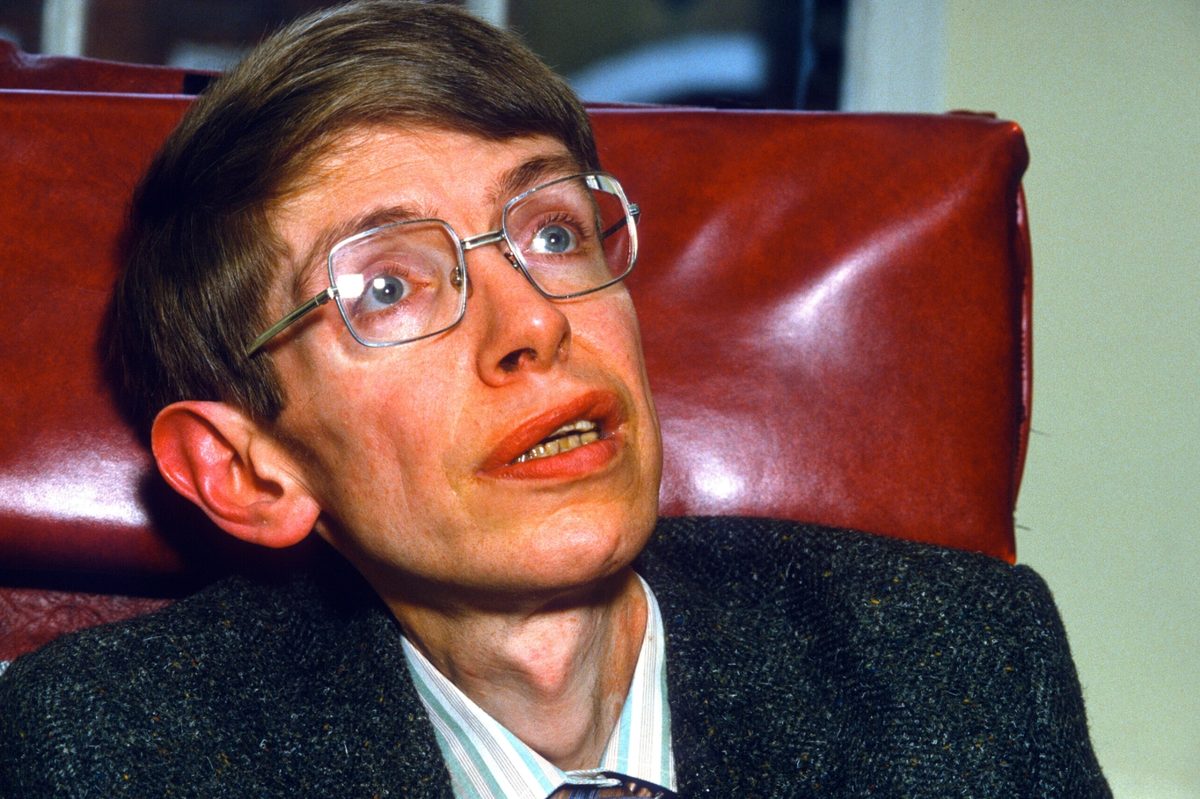
Stephen Hawking, the iconic physicist whose name became synonymous with cosmology and genius, passed away in 2018, leaving behind a legacy documented in numerous books, films, and his own prolific writings. The question often arises: is there anything new left to uncover about such a widely known figure? Graham Farmelo's Hawking, the first authorized biography, purports to answer this by delving into previously unpublished family archives and personal accounts. While the biography meticulously covers Hawking's early life and personal relationships, its most compelling contributions lie in its critical reassessment of his later scientific career and the intricate tapestry of his professional conduct.
Key Details
- Author: Graham Farmelo
- Publication: UK: John Murray (24 September), US: Bantam (24 November)
- Content: First authorized biography of Stephen Hawking, utilizing unpublished family material.
- Focus: Reassessment of Hawking's later life, scientific contributions, and professional relationships.
- Key Scientific Concepts Discussed: Hawking radiation, black holes, string theory, M-theory, Higgs boson.
- Controversies Highlighted: Frequent oversight in acknowledging collaborators on scientific papers.
Background
Farmelo dedicates the initial chapters to Hawking's upbringing, drawing from extensive documentation provided by his parents, Frank and Isabel. Born in 1942, Hawking experienced a relatively typical middle-class post-war childhood. His father, an amateur scientist, shared a telescope with young Stephen, while his mother managed the household. The family's experiences, including a close call with a V1 rocket and supplementing rations with homegrown vegetables, are presented with detailed scholarship. While historically significant, these early accounts offer less narrative momentum compared to the later, more scientifically charged periods of Hawking's life. The biography also touches upon the profound impact of his diagnosis with motor neuron disease and his early marriage to Jane Wilde. However, as the reviewer notes, this period is extensively covered in other popular accounts, notably Jane Hawking's autobiography and the film The Theory of Everything.
Impact Analysis
The narrative gains significant traction when Farmelo shifts focus to Hawking's emergence as a working scientist in the late 1960s and early 1970s. This era was a fertile ground for cosmological inquiry, and Hawking was at the forefront, particularly with his work on black holes. At a time when black holes were viewed with skepticism by many, akin to mythical creatures, Hawking's research was bold and groundbreaking. Farmelo effectively immerses the reader in this scientific milieu. However, this period also brings to light a recurring and troubling aspect of Hawking's professional life: his tendency to overlook or fail to adequately acknowledge collaborators. Farmelo documents instances where Hawking published papers without naming researchers who, by conventional scientific standards, should have been co-authors. While the biography highlights these disputes, it refrains from a deep psychological analysis of this behavior, despite its apparent link to the fame and adoration Hawking later courted. The resurfacing of these often-smoothed-over conflicts within an authorized biography is, nevertheless, a notable achievement.
“Farmelo’s isn’t the first revisionist take on Hawking – Charles Seife got there first in 2021 with Hawking Hawking, a book which examined the making of his celebrity and failed to attract a UK publisher, perhaps because it was felt too controversial in his home country.”
Hawking's most celebrated contribution, the theory of Hawking radiation—the concept that black holes emit particles and can eventually evaporate—remains a cornerstone of theoretical physics, though it has yet to be experimentally detected. This lack of empirical verification is cited as a reason why Hawking never received a Nobel Prize, a fact the biography suggests was a source of personal disappointment.
The book critically examines Hawking's later scientific output, particularly following the immense success of A Brief History of Time. Farmelo suggests that as decades passed, some of Hawking's scientific ideas became less original, or even erroneous. He notes Hawking's history of losing scientific bets, including a notable one concerning the existence of the Higgs boson, a particle he publicly doubted months before its discovery. Like many contemporaries, Hawking was drawn to string theory and M-theory, frameworks that, from the current vantage point, appear to be less fruitful avenues of research. Personal reporting from the time corroborates this, with physicists privately expressing reservations about the novelty and depth of Hawking's later work, often masked by attention-grabbing headlines.
Broader Context
Farmelo acknowledges these criticisms in the epilogue but doesn't fully explore the underlying reasons. The reviewer posits that a combination of factors likely contributed: a potential decline in original ideas, a pursuit of fame, and the increasing communication challenges posed by his deteriorating condition. These complexities paint a picture of Hawking not just as a scientific icon, but as a multifaceted individual grappling with the pressures of celebrity, the evolution of his own intellect, and the limitations imposed by his physical state.
Future Outlook
The biography serves as a valuable resource, particularly for those less familiar with Hawking's detailed life story. For readers who have followed his journey closely, the new material might offer incremental insights. However, the reviewer suggests that Charles Seife's earlier work, Hawking Hawking, may have provided a more incisive examination of Hawking's celebrity. As Hawking's life recedes further into history, Farmelo's meticulous scholarship provides a solid foundation for future retrospectives. The hope is that ongoing analysis will continue to unravel the complexities of his scientific and personal legacy, moving beyond the established narrative to a more nuanced understanding.
Conclusion
Graham Farmelo's Hawking is a significant contribution to the literature on the famed physicist. It succeeds in bringing new material to light and offering a more critical perspective on Hawking's later career, particularly his groundbreaking work on black holes and the controversies surrounding his collaborations. While the early biographical details are extensive, the book's true value lies in its unflinching look at the man behind the scientific legend, acknowledging both his profound intellect and his human complexities. It encourages a continued dialogue about Hawking's legacy, urging a deeper deciphering of his contributions and the motivations behind his scientific pursuits.
Source: newscientist.com