Microscopic Fish Discovery Highlights Vast Unknowns of Deep Ocean
Introduction
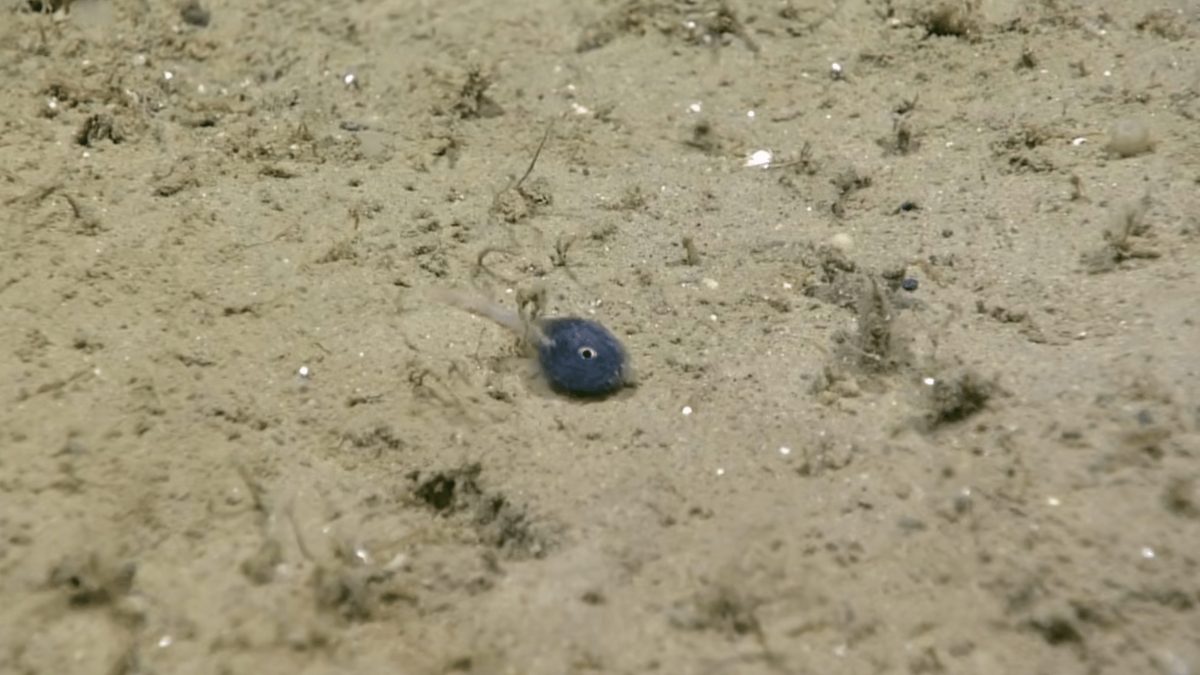
The deep ocean remains one of Earth's final frontiers, a realm of perpetual darkness and immense pressure, harboring mysteries as profound as those found in outer space. Recently, scientists from the National Oceanic and Atmospheric Administration (NOAA) Ocean Exploration team encountered a testament to this profound unknown: an “outrageously tiny” fish, observed in the Northeast Canyons and Seamounts Marine National Monument off the coast of New England.
Key Details
- Discovery: A minuscule fish, estimated to be between 5 millimeters (0.19 inches) and 1 centimeter (0.4 inches) in length.
- Location: Northeast Canyons and Seamounts Marine National Monument, Atlantic Ocean, off the New England coast.
- Potential Species: Scientists speculate it may be a juvenile toadfish (family Batrachoidida), known for their distinctive downturned mouths and benthic (sea floor) lifestyle.
- Expedition Context: The sighting occurred during the Deep Connections 2019 expedition, focused on exploring Atlantic canyons and seamounts.
- Ongoing Research: NOAA continues deep-sea exploration, including a recent 2026 Cook Islands ROV Exploration and a current expedition near Wake Island.
Background
The discovery of this diminutive creature occurred during the Deep Connections 2019 expedition, a mission dedicated to probing the largely unexplored depths of the Atlantic's underwater canyons and seamounts. These regions, characterized by extreme conditions, are known to host unique ecosystems that have evolved in isolation. While the exact species of the tiny fish remains unidentified, researchers hypothesize it could be a juvenile toadfish. These fish are adapted to life on the seabed, patiently waiting for prey to wander within range, often sporting a perpetually unimpressed expression often likened to a “Monday Face.” The discovery serves as a potent reminder that even in relatively well-trafficked ocean basins, the deep sea continues to yield surprises.
Impact Analysis
While the discovery of a single, tiny fish might seem insignificant, its implications are far-reaching. It underscores the vastness of unexplored biodiversity in the deep ocean. Each new species identified, regardless of size, adds a crucial piece to the puzzle of marine ecosystems. This finding highlights the critical need for continued deep-sea exploration and research. Understanding these remote environments is vital for assessing their health, identifying potential threats from human activities like deep-sea mining and climate change, and discovering novel biological resources. The sheer scale of the unknown means that countless species, potentially holding keys to scientific or medical advancements, remain undiscovered.
Broader Context
NOAA's commitment to deep-sea exploration extends beyond this single observation. The agency is actively involved in numerous expeditions, showcasing a dedication to unraveling the ocean's secrets. Following the Deep Connections 2019 mission, NOAA recently concluded its 2026 Cook Islands ROV Exploration in the Pacific. This expedition yielded significant findings, including the recovery of a whale beak and observations of ethereal glass sponges (class Hexactinellida), highlighting the diverse and often alien-like life forms inhabiting the abyss. Currently, NOAA is collaborating with Nautilus Live on an expedition near Wake Island, a remote landmass situated in the vast expanse of the Pacific Ocean. This 30-day endeavor employs advanced technologies like remotely operated vehicles (ROVs) and sophisticated mapping systems to gather baseline data on a substantial marine area. The expedition also aims to identify potential maritime heritage sites, including those linked to the historic Battle of Wake Island in 1941. This battle, though a Japanese victory, came at a considerable cost, involving the loss of significant naval assets and personnel, while Allied losses were remarkably low.
Future Outlook
The ongoing and future deep-sea explorations by NOAA and its partners are crucial for building a comprehensive understanding of our planet's oceans. The data collected from these missions will inform conservation efforts, guide sustainable resource management, and potentially lead to groundbreaking scientific discoveries. As technology advances, enabling us to venture deeper and longer into the ocean's hidden realms, we can anticipate more remarkable findings. The tiny fish discovered off New England is not just a curiosity; it is a symbol of the immense biological wealth that awaits discovery and the urgent need to protect these fragile, largely unknown ecosystems before they are irrevocably altered or lost.
Conclusion
The discovery of a fish measuring mere millimeters in the deep Atlantic serves as a powerful reminder of how much we still have to learn about our own planet. It emphasizes the importance of continued investment in oceanographic research and exploration. These expeditions are not merely about cataloging new species; they are about understanding the intricate web of life that sustains our planet and ensuring the long-term health of marine environments for future generations. The deep sea, a realm of perpetual twilight, holds secrets that are only beginning to surface.
Source: popsci.com