HORIBA AP-380 Air Quality Monitor Achieves UK MCERTS Certification, Exceeding Standards
Introduction
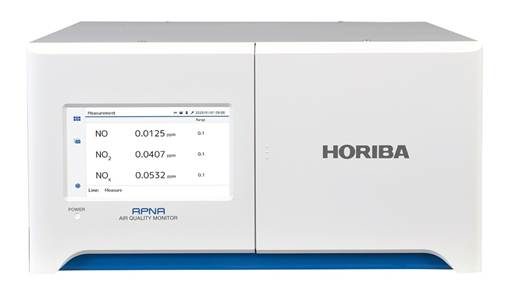
HORIBA UK Limited, a subsidiary of the HORIBA Group, has announced a significant milestone for its AP-380 Series Air Quality Monitor: achieving MCERTS certification. This accreditation, widely regarded as the UK’s gold standard for environmental monitoring equipment, underscores the device’s capability for precise and continuous measurement of trace gases. The AP-380 Series already boasts global regulatory acceptance, holding type approvals from prominent bodies such as the US EPA, Germany’s UBA/TÜV Rheinland, Korea’s NIER, and China’s SAMR, further solidifying its international credibility.
Key Details
- Certified Performance: The AP-380 Series successfully met the stringent MCERTS certification requirements, demonstrating exceptional accuracy.
- Measured Gases: The monitor continuously measures concentrations of CO, SO2, O3, NO, NO2, NOx, CH4, NMHC, and THC.
- Accuracy Exceeds Standards: Independent TÜV data revealed that all four certified modules comfortably surpassed the maximum relative expanded uncertainty requirement of 15%, by margins of 5 to 11 percentage points.
- Global Acceptance: Holds type approvals from US EPA, German UBA/TÜV Rheinland, Korean NIER, and Chinese SAMR, in addition to MCERTS.
- Modular Design: Features a compact, low-power, and modular construction for versatile integration and easy on-site maintenance.
- Remote Operation: Offers full remote operation and diagnostics via PC, smartphones, or tablets, reducing site visits and operational costs.
Background
The journey to MCERTS certification involved months of demanding field testing. The AP-380 Series was subjected to rigorous evaluation alongside a busy six-lane motorway near Cologne, Germany. This challenging environment simulated the real-world conditions that environmental monitoring equipment often faces. The certification process is designed to ensure that monitoring equipment meets high standards of performance, reliability, and data integrity. For HORIBA, achieving MCERTS for the AP-380 Series represents a culmination of extensive engineering expertise and a commitment to developing robust environmental solutions.
Impact Analysis
The MCERTS certification provides a significant boost to the AP-380 Series’ market position, particularly within the UK and Europe. It offers customers a high degree of assurance regarding the instrument’s accuracy and reliability. The data collected by such certified equipment is crucial for regulatory compliance, environmental policy development, and public health initiatives. By exceeding the required accuracy standards, the AP-380 Series not only meets current regulatory demands but also provides a future-proof solution for organisations investing in air quality monitoring infrastructure. This high level of confidence can translate into reduced risk and more effective environmental management for users.
“Given the demanding real-world conditions that the AP-380 Series underwent to achieve the UK Environment Agency’s stringent MCERTS certification, the results of the field testing represent a strong validation of our platform’s engineering quality,” said Lewis Redford-Knight, Energy and Environmental Sales Manager, HORIBA UK. “Built on over 60 years of HORIBA’s air pollution monitoring expertise and core technology for trace gas analysis, this certification confirms the AP-380’s high-sensitivity, consistent and dependable performance.”
Broader Context
Air quality monitoring is a critical component of environmental protection and public health strategies worldwide. Increasing urbanisation and industrial activity necessitate sophisticated tools to track and manage air pollutants. The AP-380 Series addresses this need with its versatility, capable of monitoring a wide range of gases from parts per billion (ppb) to parts per million (ppm). Its applications span from traditional ambient air pollution monitoring and vehicle emissions testing to more specialised industrial uses, such as process monitoring, semiconductor gas purity checks, and cleanroom environments. The modular design further enhances its adaptability, allowing for custom configurations in stationary, wall-mounted, mobile, or portable setups. This flexibility ensures that the AP-380 can be deployed effectively in diverse settings, from space-constrained mobile units to large industrial facilities.
Future Outlook
The successful MCERTS certification positions the HORIBA AP-380 Series favourably for future growth, especially in regulated markets. The trend towards stricter environmental regulations globally will likely increase demand for certified, high-accuracy monitoring equipment. Furthermore, the integrated remote operation and diagnostics capabilities align with the growing adoption of smart technologies and the Internet of Things (IoT) in environmental monitoring. This feature not only enhances user convenience and efficiency but also contributes to reduced operational costs and a smaller carbon footprint by minimising the need for physical site visits. HORIBA’s continued investment in advanced trace gas analysis technology suggests a pipeline of innovative solutions to meet evolving environmental challenges.
Conclusion
The MCERTS certification of the HORIBA AP-380 Series Air Quality Monitor is a testament to its advanced engineering and reliable performance. Exceeding stringent accuracy requirements in rigorous field tests validates its capability for precise trace gas measurement. With its global regulatory acceptance, versatile applications, modular design, and advanced remote operation features, the AP-380 Series is well-equipped to serve a wide array of environmental monitoring needs. This achievement reinforces HORIBA’s position as a leader in air quality monitoring technology, providing customers with confidence and future-proof solutions for critical environmental challenges.
Source: news-medical.net