Heat Acclimation Breakthrough: Older Adults Show Significant Physiological Adaptation
Introduction
As climate change intensifies, extreme heat events are becoming more frequent and severe, posing a significant threat to human health, particularly for vulnerable populations. Recent studies are shedding light on the body's remarkable ability to adapt to high temperatures, a process known as heat acclimation. Crucially, new research indicates that this adaptation is not limited to younger, healthier individuals, but can also be achieved by older adults, offering a potential lifeline against the dangers of heat waves.
Key Details
- Study Focus: Investigating whether older adults (60s-80s) can achieve heat acclimation, similar to younger individuals.
- Methodology: Participants underwent repeated exposures to high temperatures, including hot water immersion (around 40°C) and simulated heat waves (36°C at 45% humidity).
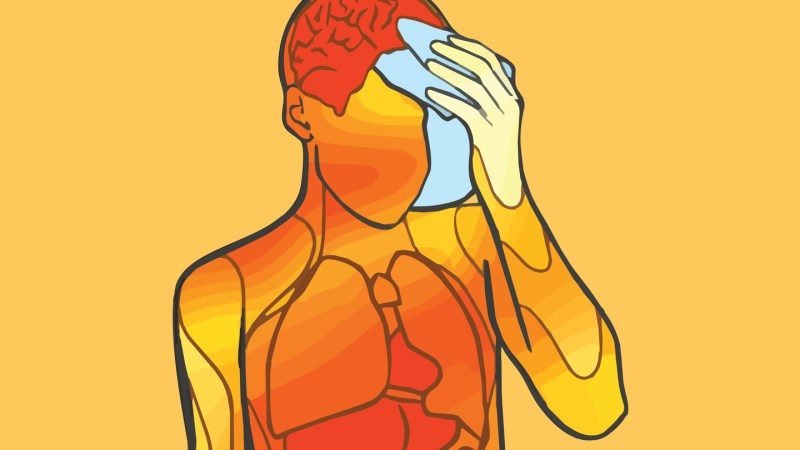
- Physiological Changes Observed: Increased sweating efficiency, earlier vasodilation (widening of blood vessels), expanded blood volume, reduced heart rate, and increased production of heat shock proteins.
- Age Group Effectiveness: Studies involving adults in their 20s-30s and 60s-70s showed comparable improvements in heat tolerance after acclimation protocols.
- Impact on Core Temperature: Acclimated individuals maintained a lower core body temperature (up to 0.4°C lower) and a reduced heart rate during heat exposure compared to pre-acclimation levels.
- Vulnerable Populations: The research holds promise for protecting at-risk groups, including the elderly and those with chronic health conditions, who are disproportionately affected by heat waves.
Background
The human body possesses a natural capacity to adjust to environmental stressors, including heat. In younger, healthy individuals, repeated exposure to high temperatures triggers a cascade of physiological responses. Sweating becomes more efficient, initiating earlier and at a higher intensity to maximize evaporative cooling. Blood vessels in the skin dilate more readily, facilitating heat radiation from the body's core to the surface. Initially, this requires the heart to work harder, but over time, the body adapts by increasing blood volume, which helps maintain blood pressure and reduces the resting heart rate. At a cellular level, the production of heat shock proteins increases, acting as molecular chaperones to protect and repair cellular structures damaged by heat stress.
Impact Analysis
The implications of successful heat acclimation in older adults are profound. Globally, heat waves are claiming an increasing number of lives, with over 10,000 estimated deaths in Europe during a single June heat wave. Older individuals, particularly those with pre-existing chronic conditions, are especially susceptible due to age-related declines in thermoregulatory functions, such as reduced sweating capacity and impaired cardiovascular responses. The research by Caroline Li-Maloney, Daniel Gagnon, and Jeremy McCormick suggests that intentional, controlled heat exposure can counteract these declines. Their studies have shown that older participants experienced similar physiological benefits to younger cohorts, including earlier onset of sweating, enhanced vasodilation, and a lower heart rate during heat challenges. This improved physiological response translates to better heat tolerance, potentially reducing the risk of heat exhaustion and heatstroke.
“With more frequent periods of extreme heat … can we actually acclimate older populations, especially those with chronic diseases?” asks heat physiologist Daniel Gagnon of the Montreal Heart Institute and the Université de Montréal. He’s hoping that the answer is “yes.”
Broader Context
The findings align with observations of populations living in consistently hot climates, who often exhibit a higher minimum mortality temperature – the ambient temperature at which the risk of death is lowest. For instance, residents of Mecca, Saudi Arabia, demonstrate a higher minimum mortality temperature compared to visitors, suggesting a degree of physiological adaptation. While factors like genetics and access to air conditioning play a role, physiological acclimation is considered a significant contributor. The research also highlights the transient nature of these adaptations; they can diminish over cooler periods, explaining why early summer heat waves can be particularly deadly. This underscores the need for regular, intentional exposure to heat to maintain acclimatized status, especially for those anticipating periods of extreme temperatures.
Future Outlook
While the results are promising, further research is needed to determine the optimal “dose” of heat exposure required for sustained acclimation and to ensure the safety of these protocols for individuals with specific health concerns, such as heart disease or mobility issues. The use of hot water immersion as a controlled acclimation method is being explored as a potentially safer alternative to other methods like strenuous exercise in hot weather or hot yoga, which may carry higher risks for certain individuals. If validated and refined, these protocols could become a standard public health strategy, enabling vulnerable populations to better withstand the increasingly harsh realities of a warming world. One participant's experience traveling in Thailand, where she felt comfortable while her tour group suffered, provides a compelling anecdotal testament to the potential benefits.
Conclusion
The growing body of evidence suggests that heat acclimation is an achievable and beneficial strategy for enhancing thermoregulation, even in older adults. By understanding and harnessing the body's adaptive capabilities through controlled exposure, we can develop interventions to mitigate the severe health risks associated with extreme heat. This research opens a critical pathway towards protecting those most vulnerable to climate change's deadly impacts, offering a proactive approach to survival in an era of escalating global temperatures.
Source: sciencenews.org