Zoom Leverages SNL Stars to Reshape Brand Beyond Video Conferencing
Introduction
Zoom, a name synonymous with video conferencing for millions worldwide, is embarking on a strategic rebranding effort. Recognizing that its public image is largely confined to its pandemic-era success, the company is deploying a creative advertising campaign featuring prominent alumni from Saturday Night Live, including Kate McKinnon and Bowen Yang. The goal is to reintroduce Zoom not just as a meeting platform, but as a comprehensive, AI-powered suite of tools designed for the modern workplace.
Key Details
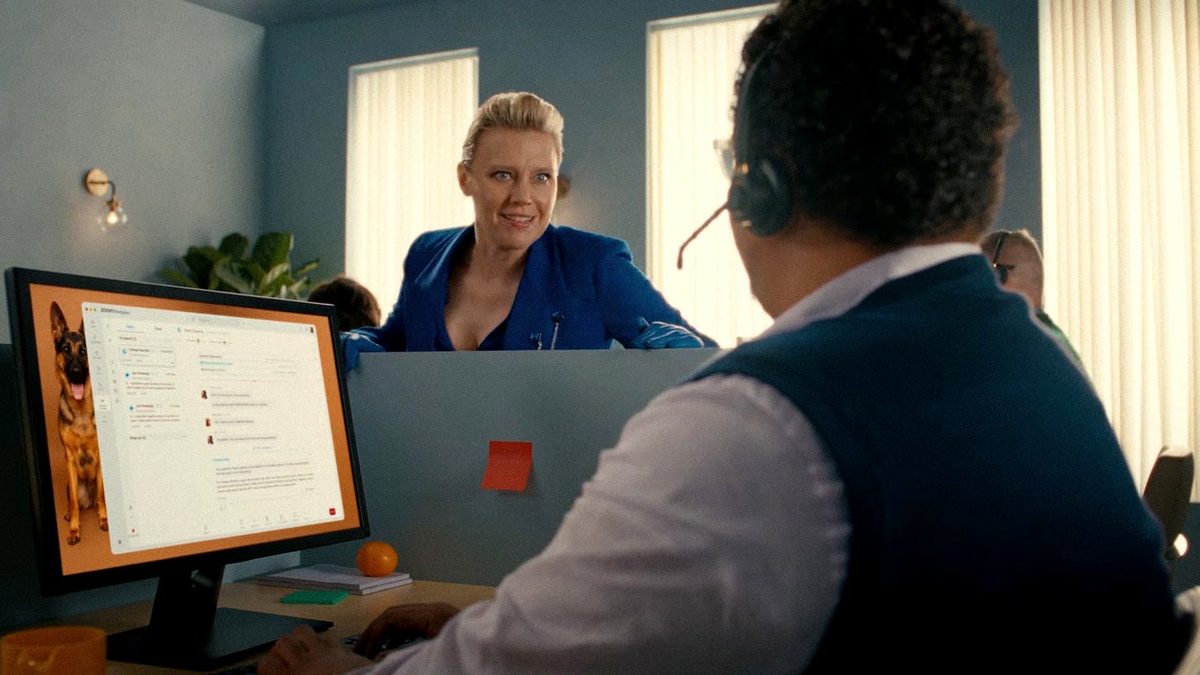
- New Ad Campaign: The latest ad stars Kate McKinnon as a supervillain whose plans for Zoom's destruction are thwarted by her minions' reliance on the platform for all their tasks. This follows a previous spot featuring Bowen Yang.
- Partnership: The campaign is a collaboration with Colin Jost's creative agency, No Notes.
- Campaign Theme: Titled “Zoom Ahead,” the campaign uses over-the-top comedy to highlight Zoom's expanded capabilities beyond video conferencing.
- CMO's Vision: Kim Storin, Zoom's Chief Marketing Officer, joined in April 2025 with the primary objective of broadening the public's understanding of Zoom's diverse product portfolio.
- Brand Awareness vs. Perception: While Zoom boasts 99% brand awareness among workplace communication tool users (YouGov, 2026), this recognition is heavily tied to its video conferencing function.
- Expanded Services: Zoom now offers platforms for customer service, recruiting, employee engagement, marketing (webinars/events), and a suite of AI features like agentic search, meeting notetaking, and AI sales/design agents.
- Humor as a Strategy: The campaign leverages humor to make the brand's evolution more accessible and less corporate, breaking down communication barriers.
- Influencer and Creator Partnerships: In addition to the ad campaign, Zoom is engaging with content creators across various niches through its “Zoombassadors” program.
Background
Zoom's meteoric rise during the COVID-19 pandemic cemented its place in the global lexicon. Suddenly, the platform was essential for everything from corporate board meetings and classroom lectures to family gatherings and virtual social events. This widespread adoption, however, created a powerful, albeit narrow, brand association. As the world shifted back towards in-person interactions, Zoom faced the challenge of maintaining relevance and communicating its evolution beyond its most recognized use case.
The company's leadership, particularly CMO Kim Storin, recognized this brand perception gap. Storin's mandate since joining in early 2025 has been to actively reshape how users and potential customers view Zoom. The strategy involves a multi-pronged approach, combining high-profile celebrity endorsements with a focus on demonstrating the practical applications of Zoom's expanded service offerings.
Impact Analysis
The “Zoom Ahead” campaign, with its comedic yet pointed narrative, aims to tackle Zoom's brand perception problem head-on. By using familiar faces from SNL, Zoom taps into a cultural zeitgeist that resonates with a broad audience. The humor serves as an effective vehicle to convey complex information about the company's expanded services, making them more digestible and memorable.
The campaign's success hinges on its ability to make users realize that Zoom is no longer just a tool for virtual meetings. The McKinnon ad, for instance, playfully illustrates how Zoom can manage a wide array of tasks, from customer service to business administration, even hinting at its potential for self-disruption. This narrative is crucial for a company seeking to position itself as a leader in the productivity and AI space, competing with other tech giants that have also broadened their offerings.
Broader Context
Zoom's situation is emblematic of a larger trend in the Software as a Service (SaaS) industry. Companies that achieve dominant market share in a specific niche often find themselves needing to diversify to maintain growth and relevance, especially in an era increasingly defined by artificial intelligence. Competitors like Notion, Superhuman, and Calendly have all successfully transitioned from single-function tools to comprehensive productivity ecosystems.
Zoom's ambition to become an AI-powered toolkit for the workplace aligns with this industry evolution. The company is not just facilitating conversations; it aims to leverage AI to act upon them—generating documents, sending follow-ups, and conducting research. This positions Zoom as a potential disruptor in areas traditionally dominated by specialized software, challenging the perception that its capabilities are limited to video calls.
Future Outlook
The success of this rebranding initiative will likely be measured by Zoom's ability to attract new customers and retain existing ones by showcasing its expanded value proposition. The combination of celebrity-driven advertising, influencer marketing through programs like “Zoombassadors,” and strategic appearances at industry events suggests a sustained effort to shift perception.
If the campaign resonates, Zoom could solidify its position as a versatile workplace solution, moving beyond its pandemic fame. The company is betting that humor and relatable scenarios will help it regain its “swagger,” as CMO Storin puts it, and convince users that Zoom is an indispensable partner for a wide range of professional tasks, powered by cutting-edge AI.
Conclusion
Zoom's current marketing strategy, spearheaded by its “Zoom Ahead” campaign featuring SNL stars, represents a bold attempt to redefine its brand identity. By acknowledging its past success while aggressively promoting its future capabilities—particularly its AI-driven features—Zoom aims to capture a larger share of the productivity software market. The use of humor and relatable narratives is a calculated risk, designed to cut through the noise and connect with a broad audience, ultimately challenging the perception that Zoom is merely a video conferencing tool and positioning it as an all-encompassing AI-powered workplace solution.
Source: fastcompany.com