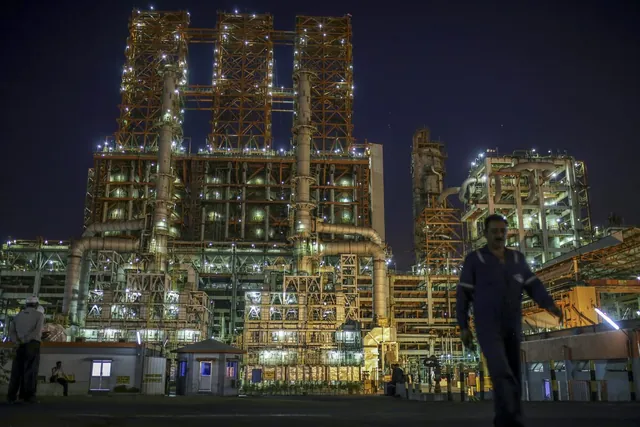
US Natural Gas Boom Fuels Multibillion-Dollar Pipeline Acquisitions for AI and Exports

Introduction
The United States is on the cusp of a significant expansion in natural gas production, a trend that is reshaping the energy infrastructure landscape. Pipeline giants are actively engaging in a wave of multibillion-dollar acquisitions, consolidating smaller competitors to build scale and prepare for soaring demand. This strategic consolidation is primarily fueled by two powerful forces: the burgeoning need for electricity to power artificial intelligence (AI) data centers and the escalating global demand for liquefied natural gas (LNG) exports.
Key Details
- Major Acquisitions: Recent deals include ONEOK's $4.42 billion purchase of Brazos Midstream's Permian Basin assets, Williams' $5.5 billion acquisition of Momentum Midstream, and Western Midstream's $1.6 billion buy of Brazos' Delaware Basin facilities.
- Production Surge: US natural gas production has more than doubled since 2006 and is projected to rise another 35% by 2050, reaching 150 billion cubic feet per day (Bcf/d), according to the US Department of Energy.
- Demand Drivers: Key demand drivers are the energy-intensive AI data centers, particularly in Texas, and the expansion of LNG export terminals along the Gulf Coast.
- Infrastructure Expansion: Companies like ONEOK are investing heavily in new pipelines, such as the 450-mile Eiger Express Pipeline, to transport increased gas volumes from production hubs to demand centers.
- Industry Consolidation: The trend highlights a broader industry movement where larger, publicly traded companies are acquiring smaller, privately held firms to gain market share and operational efficiencies.
- Financial Strategy: ONEOK is securing funding for its acquisitions, including a $9 billion investment from Apollo Global Management, partly to reduce debt from previous large-scale deals.
Background
The US shale gas revolution, which began in earnest around 2006, fundamentally altered the nation's energy production. After decades of relatively flat output, natural gas production more than doubled, establishing the US as the world's largest producer. This growth has been further accelerated by advancements in extraction technologies and a strategic focus on developing export capabilities. The US now accounts for approximately a quarter of global natural gas production, nearly double that of Russia, and has rapidly become the leading exporter of LNG, a position achieved within just the last decade.
Impact Analysis
The current wave of acquisitions signifies a critical juncture for the US natural gas industry. Companies are not merely expanding capacity; they are strategically positioning themselves to capture value across the entire supply chain. As London Spivey, energy analyst for East Daley Analytics, noted regarding the ONEOK-Brazos deal, the acquisition allows ONEOK to “profit along every step of the value chain,” from extraction to processing and transportation to end-users like data centers and LNG facilities. This integrated approach is crucial for managing the volatile price fluctuations that have historically plagued some gas-producing regions, such as the Permian Basin, where excess supply sometimes led to negative spot prices. The ongoing construction of new long-haul pipelines is essential to alleviate these bottlenecks and ensure that the increasing production can reach markets efficiently.
“There will eventually have to be more drilling in the United States than what’s going on right now, which will probably mean that [gas] price does creep up,” said ONEOK CEO Pierce Norton. “The demand is going to be there, and it’s going to be driving by LNG exports and the AI data centers.”
Broader Context
The surge in natural gas demand is occurring within a complex global energy transition. While renewable energy sources are expanding, the significant and consistent power requirements of AI and the logistical advantages of LNG for global markets are creating robust, long-term demand for natural gas. The geographical concentration of both LNG export facilities and data centers in Texas and Louisiana is no coincidence; proximity to abundant, relatively affordable natural gas supplies and favorable regulatory environments are key factors. Furthermore, as established oil-producing regions like the Permian Basin mature, their output naturally shifts towards a higher ratio of natural gas, further bolstering domestic supply independent of new oil drilling.
Future Outlook
Projections indicate a sustained period of growth for US natural gas production and infrastructure development. The US Department of Energy forecasts a potential 35% increase in output by 2050, driven by both domestic consumption and international markets. This outlook supports continued investment in pipeline infrastructure, processing facilities, and LNG export capacity. The consolidation trend among pipeline operators is likely to persist as companies seek economies of scale and greater control over their networks. The strategic importance of natural gas as a power source for emerging technologies like AI, coupled with its role in global energy security through LNG, suggests that the industry will remain a significant player in the energy landscape for the foreseeable future.
Conclusion
The American natural gas sector is entering a dynamic phase characterized by substantial production growth, aggressive industry consolidation, and increasing demand from both domestic high-tech sectors and international markets. The multibillion-dollar acquisitions by pipeline giants are a clear signal of confidence in the long-term prospects of natural gas. As companies like ONEOK strategically expand their footprints and infrastructure, they are not only responding to current market needs but also laying the groundwork for a future where natural gas plays a pivotal role in powering artificial intelligence and meeting global energy demands.
Source: fortune.com