US Army Neutralizes Three Drones with High-Energy Laser Near Mexico Border
Introduction
In a significant demonstration of evolving military technology, the United States Army successfully utilized a high-energy laser system to neutralize three unmanned aerial vehicles (UAVs) near the US-Mexico border. The operation, which took place between the night of August 25 and the early morning of August 26, occurred in the Rio Grande Valley, Texas. Officials stated the drones were “posing a physical threat to US military personnel and CBP partners,” referring to Customs and Border Patrol agents. This event underscores the increasing sophistication of threats faced at the border and the military’s adaptation to counter them with advanced weaponry.
Key Details
- Incident: Three drones were shot down using a high-energy laser system.
- Location: Vicinity of the Rio Grande Valley, Texas, near the US-Mexico border.
- Date: Night of August 25 - early morning of August 26.
- Operator: Joint Task Force Southern Border (JTF-SB), under US Northern Command.
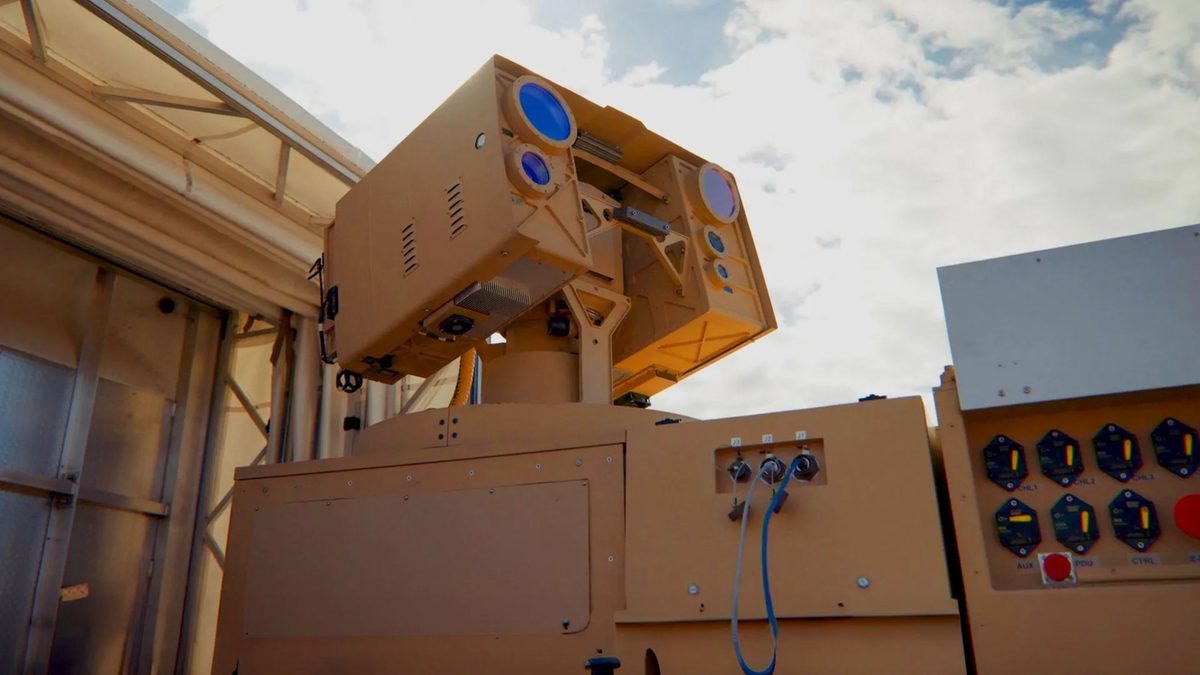
- Technology: Army’s High-Energy Multipurpose Laser (AMP-HEL) system, specifically the Locust Laser Weapon System.
- System Capabilities: Detects, tracks, illuminates, damages, and destroys targets at a distance using a concentrated beam of light, enhanced by electrical energy to generate heat.
- Origin of Drones: Unconfirmed, but suspected to be linked to criminal cells involved in drug trafficking and human smuggling.
Background
The technology employed, part of the Army’s AMP-HEL program, has been in development with defense contractor AeroVironment. The program began in September 2025 with the delivery of initial prototypes, followed by improved systems in December of the same year. The Locust system is designed for vehicle mounting, allowing for mobile defense capabilities. Operating at 20 kilowatts, the Locust uses advanced sensors and precise targeting to focus a powerful light beam onto a drone. This concentrated energy generates heat, which damages or disables the target. Newer versions, like those delivered last December, integrate radar and command-and-control systems, enhancing their utility within broader defense networks.
Impact Analysis
The successful interception of these drones marks a critical milestone in the deployment of directed-energy weapons for border security. While the exact nature of the threat posed by the drones remains officially vague, Major General Curtis Taylor, commander of JTF-SB, provided crucial context. He stated, “Cartel networks are increasingly employing unmanned aircraft systems to facilitate illicit human smuggling and actively spy on our personnel and law enforcement partners.” This statement directly links the incident to the ongoing challenges posed by transnational criminal organizations. The use of lasers offers a distinct advantage over traditional projectiles, providing a less-lethal or non-lethal option that can neutralize threats without causing collateral damage. It also offers a more cost-effective solution per engagement compared to conventional munitions, especially against swarms of smaller drones.
Broader Context
This operation occurs within the larger framework of heightened border security efforts. While the original report mentions a link to President Donald Trump’s campaign promises regarding border security, the deployment and use of such advanced technology represent a bipartisan trend in addressing complex border challenges. Both administrations have sought to leverage technological solutions to combat illegal immigration, drug trafficking, and other illicit activities. The integration of high-energy lasers signifies a shift towards more sophisticated, less conventional methods of defense, moving beyond physical barriers and traditional surveillance.
Future Outlook
The successful use of the Locust system suggests a potential acceleration in the adoption of directed-energy weapons by the US military and border security agencies. As drone technology becomes more accessible and sophisticated, so too will the countermeasures. The ability to rapidly detect, track, and neutralize aerial threats with precision and efficiency is paramount. Future developments may see these laser systems integrated more broadly into aerial and ground defense platforms, potentially forming a crucial layer in a multi-domain defense strategy. The cooperation mentioned with Mexican Army partners also points towards a growing trend of international collaboration in tackling cross-border security threats.
Conclusion
The neutralization of three drones by a high-energy laser near the US-Mexico border is a clear indicator of the evolving nature of security threats and the innovative responses being developed. The AMP-HEL system, particularly the Locust variant, represents a significant advancement in military capabilities, offering a precise and potentially cost-effective means to counter aerial incursions. While the specific threat from these drones remains under investigation, the official statements strongly suggest a connection to criminal organizations exploiting drone technology. This incident highlights the ongoing commitment to border security and the strategic importance of technological superiority in safeguarding national interests.
Source: wired.com