Roland Enters Generative AI Music Arena with Melody Flip Plugin
Introduction
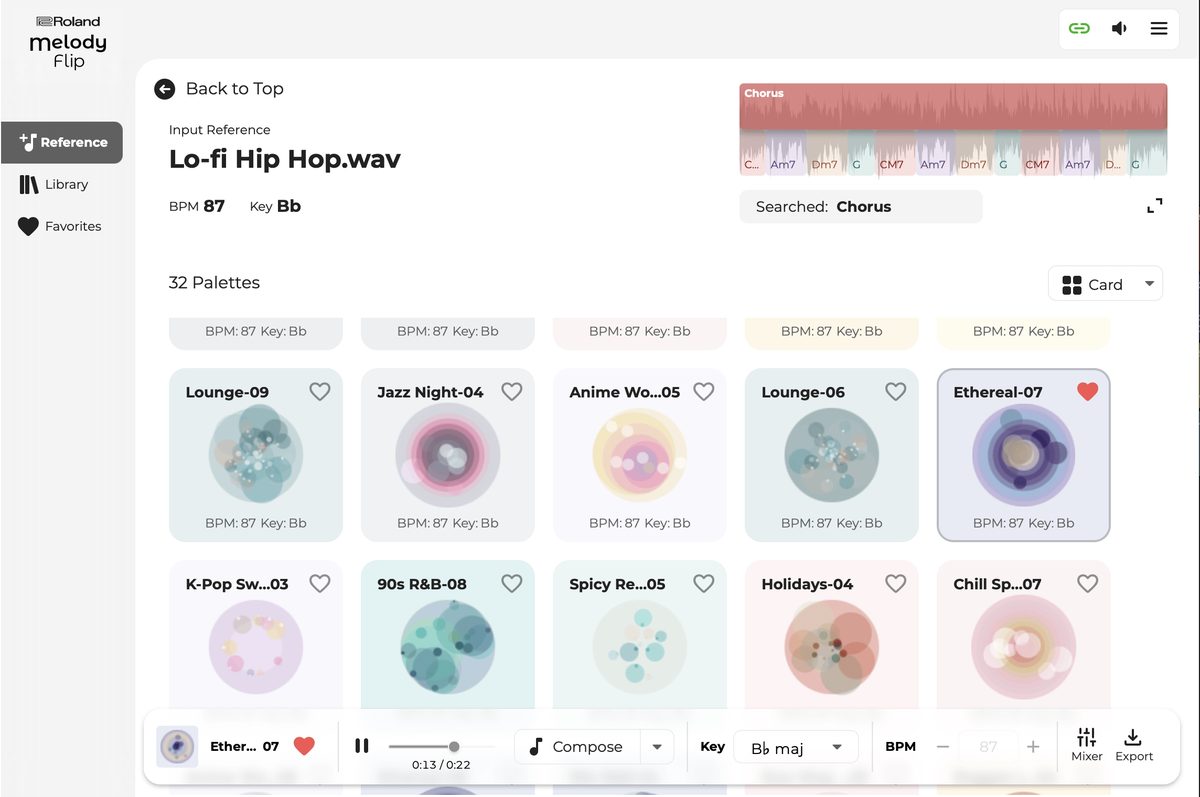
Roland, a long-standing titan in the music technology industry, has officially stepped into the burgeoning field of generative AI music with the release of its new plugin, Melody Flip. This move marks a significant, albeit cautious, embrace of AI by a company known for its synthesizers and drum machines. Unlike some of its competitors who aim to produce complete, ready-to-release tracks, Melody Flip positions itself as a collaborative tool, intended to ignite the creative process for musicians and producers working within their digital audio workstations (DAWs).
Key Details
- Product: Melody Flip, a generative AI music plugin.
- Functionality: Generates musical ideas including melody, chord progressions, basslines, and drums.
- Input Methods: Users can start from scratch or provide a reference track for inspiration.
- Content: Features approximately 250 pre-defined "Palettes" categorized by genre.
- Customization: Limited control, allowing selection of genre, note density, BPM, and musical key.
- Output Format: Primarily generates MIDI data, intended for export and manipulation within a DAW.
- Sound Quality: Preset sounds are described as basic, akin to '90s video game MIDI tones, suggesting they are not meant for final production.
Background
For decades, Roland has been synonymous with innovation in electronic music hardware. From the iconic TR-808 drum machine to the Jupiter-8 synthesizer, the company's products have shaped countless genres. However, in recent years, Roland faced criticism for perceived missteps, including a complex and sometimes alienating Roland Cloud subscription service. The company has been working to regain trust and relevance, releasing well-received hardware like the P-6 Creative Sampler, SH-4d, and Gaia 2 synthesizers, and paying homage to its analog roots with the TR-1000. The introduction of Melody Flip signifies Roland’s adaptation to the evolving technological landscape, specifically the rapid advancements in artificial intelligence within creative fields.
Impact Analysis
Melody Flip distinguishes itself from more ambitious AI music generators like Suno or Udio. Instead of aiming for complete song generation with vocals and full arrangements, Roland’s tool focuses on providing foundational musical elements. This approach suggests a strategy to integrate AI as an assistive technology within existing production workflows, rather than a replacement for human creativity. By outputting MIDI data, Melody Flip encourages users to leverage their existing skills and tools, combining the AI-generated ideas with their own sonic palettes and production techniques. This makes it a potentially valuable asset for producers looking to overcome creative blocks or explore new musical directions without committing to a fully automated composition process. However, the limited control and basic sound selection might restrict its appeal to users seeking more granular input over the AI’s output.
Broader Context
The music industry is currently navigating a complex relationship with generative AI. While some artists and platforms are exploring AI’s potential to democratize music creation and generate novel sounds, concerns about copyright, artistic integrity, and the devaluation of human labor persist. Roland’s entry into this space, with a tool designed for augmentation rather than full automation, reflects a more conservative approach. It acknowledges the power of AI while attempting to anchor it within the established practices of music production. This measured response might be an attempt to balance innovation with the expectations of its core user base, who often value hands-on control and the nuances of traditional music-making processes. The company’s history of listening to customer feedback, as evidenced by recent hardware releases, suggests this strategy is deliberate.
Future Outlook
The reception of Melody Flip will likely depend on how well it integrates into existing workflows and whether Roland provides updates to enhance its capabilities. As AI technology continues to advance rapidly, the limitations of Melody Flip might become more apparent. Future iterations could potentially offer more sophisticated control, a wider range of sonic textures, or even improved integration with vocal generation. The success of this plugin could also influence how other established music hardware and software companies approach generative AI, potentially paving the way for more assistive, rather than fully autonomous, AI tools in music production. The ongoing debate surrounding AI in music will undoubtedly shape the development and adoption of tools like Melody Flip.
Conclusion
Roland’s Melody Flip represents a measured entry into the generative AI music landscape. By focusing on providing creative sparks and MIDI data for further manipulation within DAWs, the company aims to support, rather than supplant, the role of the human producer. While its current limitations might temper widespread enthusiasm, its potential as a tool for overcoming creative hurdles and exploring new musical ideas is undeniable. As the industry grapples with the implications of AI, Melody Flip offers a glimpse into a future where technology and human artistry can coexist, albeit with careful consideration of control and creative intent.
Source: theverge.com