New Book ‘Tyrant Lizard Queen’ Reimagines T. rex Beyond Hollywood Monster
Introduction
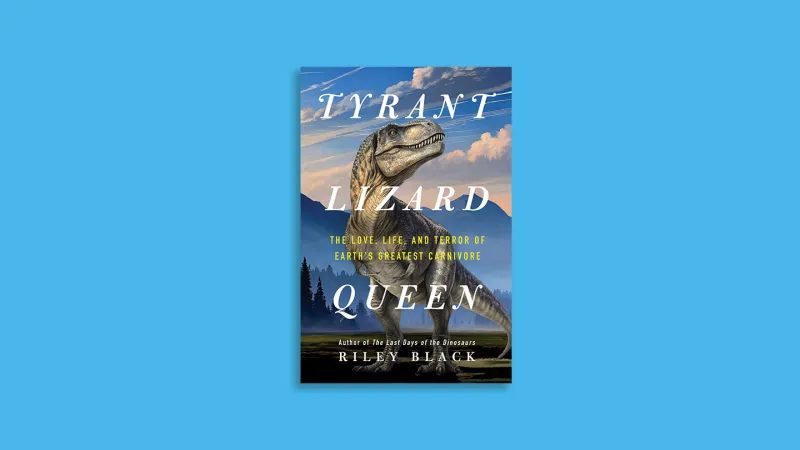
The Tyrannosaurus rex reigns supreme in the popular imagination as the ultimate prehistoric predator, a monstrous figure often depicted in Hollywood blockbusters and museum exhibits as a relentless killing machine. However, paleontologist and science writer Riley Black challenges this simplistic portrayal in her new book, Tyrant Lizard Queen. Black invites readers to look beyond the fearsome façade and consider the intricate life and evolutionary saga of this iconic dinosaur, presenting a more nuanced and scientifically grounded understanding.
Key Details
- Book Title: Tyrant Lizard Queen
- Author: Riley Black
- Publisher: St. Martin’s Press
- Price: $29.00
- Core Concept: Reimagines T. rex as a complex animal, moving beyond the Hollywood monster stereotype.
- Narrative Approach: Uses a fictional narrative featuring a young T. rex named Snag to explore scientific concepts.
- Scientific Basis: Draws on current paleontological research and uses analogies from modern animals like crocodilians and flightless birds to fill gaps in behavioral understanding.
- Themes Explored: Evolutionary journey, survival challenges, social interactions, mating, cannibalism, and the predator-prey relationship.
Background
For decades, T. rex has been cemented in public consciousness as the apex predator, a creature of immense power and destruction. Its sheer size—approximately 12 meters long and weighing eight metric tons—and its dietary needs, estimated at nearly 150 kilograms of meat daily, including bone consumption, contribute to this image. Museums often showcase dramatic skeletal mounts depicting the dinosaur in aggressive poses, further reinforcing its role as a terrifying villain. This popular perception, however, often overshadows the scientific complexities and the long evolutionary path that led to the emergence of this formidable species.
Impact Analysis
Tyrant Lizard Queen seeks to dismantle the monolithic image of T. rex by presenting a more relatable and scientifically informed character. Through the story of Snag, a fictional female T. rex navigating the perils of prehistoric Utah from hatching to adulthood, Black explores the myriad challenges faced by these animals. Snag’s journey includes surviving infanticide by a pterosaur, sibling rivalry, and even a complex social dynamic with another female, Sweet, encompassing competition for resources and a tentative mating attempt. The narrative highlights the vulnerability of young T. rex and the intricate social behaviors that likely characterized their lives, moving away from the solitary monster trope.
“No two visions of the same dinosaur are the same,” Black writes. “Plonk two paleontologists down in front of the same Tyrannosaurus skeleton and … they will imagine two different tyrannosaurs.”
Black acknowledges the limitations of the fossil record in capturing animal behavior. To address this, she transparently details her methodology in the book’s appendix, explaining how she draws parallels with modern animals. This comparative approach, using insights from crocodilians and birds like emus, allows for educated speculation on T. rex’s locomotion, social interactions, and parenting strategies. This method underscores the interpretive nature of paleontology and the creative yet scientifically grounded process of reconstructing extinct life.
Broader Context
The book places T. rex within a dynamic ecological context, illustrating how its predatory role profoundly influenced the evolution of other dinosaurs and their environment. Black emphasizes that T. rex was not merely a passive inhabitant but an active force shaping its ecosystem. The need to evade this apex predator spurred the development of speed, defensive armor, and camouflage in prey species. Conversely, the actions of herbivores, such as seed dispersal through dung and the creation of water sources in their footprints, directly contributed to the habitat structure necessary for T. rex survival. This reciprocal relationship, where “habitat changes the hunt. And the hunt changes the habitat,” provides a sophisticated view of predator-prey dynamics in the Late Cretaceous.
Future Outlook
Tyrant Lizard Queen contributes to a growing trend in paleontology and science communication that seeks to present dinosaurs not just as fossils but as living, breathing creatures with complex lives. By embracing the uncertainties and unanswered questions surrounding T. rex, Black highlights the very essence of paleontological inquiry. The book suggests that the enduring fascination with T. rex stems not only from its imposing physical characteristics but also from the scientific puzzles it presents. The ongoing quest to understand these ancient animals continues to drive research and fuel our collective imagination, ensuring that dinosaurs like T. rex will remain subjects of scientific and public interest for years to come.
Conclusion
Riley Black’s Tyrant Lizard Queen successfully reframes the narrative around T. rex, offering a compelling blend of scientific research and imaginative storytelling. It moves beyond the simplistic ‘monster’ archetype to reveal a creature shaped by evolution, environment, and intricate behaviors. By embracing the gaps in our knowledge and using modern analogies, Black provides a vivid and thought-provoking portrait of the ‘tyrant lizard queen,’ reminding us that the most captivating aspects of paleontology often lie in the questions we ask and the stories we construct to answer them. The book is a valuable addition for anyone interested in dinosaurs, evolutionary biology, or the art of science communication.
Source: sciencenews.org