Murky Water Challenges: Sticklebacks Enhance Teamwork to Find Food
Introduction
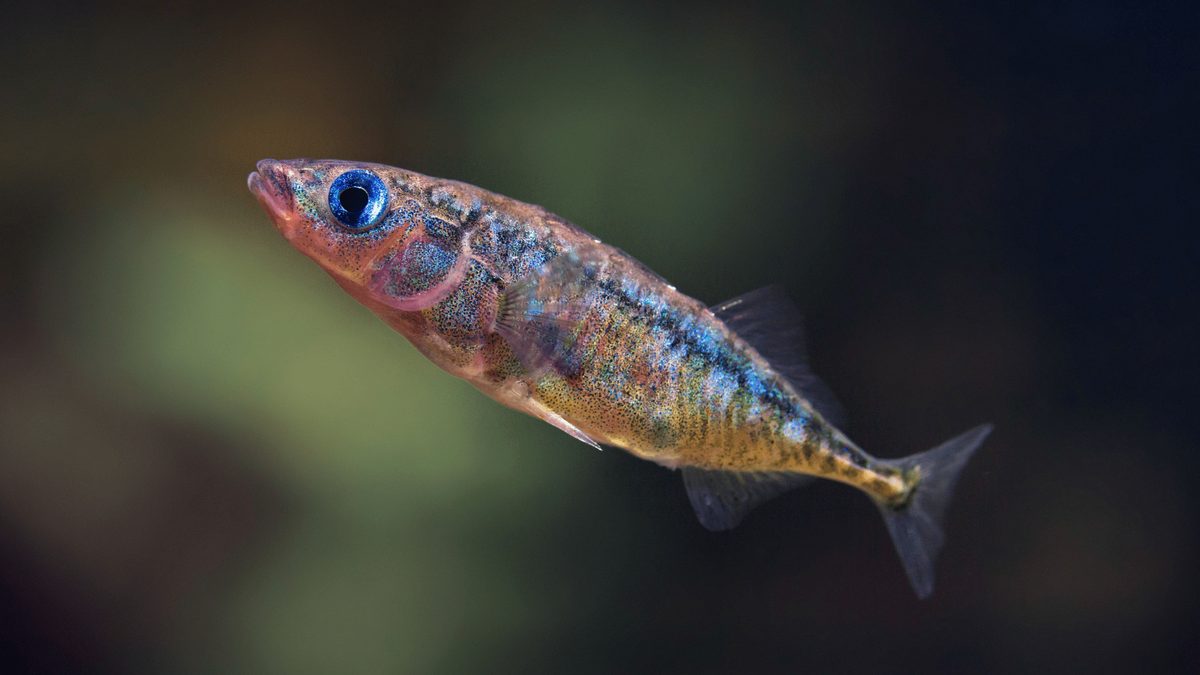
In the often-unseen world beneath the water's surface, survival hinges on a delicate balance of instinct and adaptation. For many aquatic species, murky conditions, increasingly prevalent due to human activities, present a significant challenge to finding sustenance. A recent study published in the esteemed journal Proceedings of the Royal Society B sheds light on the remarkable social strategies employed by the three-spined stickleback (Gasterosteus aculeatus) to overcome these visual limitations. These small, resilient fish, much like individuals navigating a crowded, dimly lit space, can alter their collective behavior to enhance group foraging success when visibility is compromised.
Key Details
- Species Studied: Three-spined sticklebacks (Gasterosteus aculeatus).
- Habitat Variability: These fish inhabit diverse environments, from clear freshwaters to brackish and marine waters, often experiencing varying degrees of turbidity.
- Environmental Challenge: Increased water turbidity, caused by natural processes and exacerbated by human pollution (farming, mining, construction), reduces visibility, making food detection difficult.
- Observed Behavior: In murky water, sticklebacks took longer to locate food compared to those in clear water.
- Group Size Impact: Larger groups of sticklebacks responded more quickly to food presence in both clear and cloudy conditions.
- Coordination Strategy: In murky water, smaller groups achieved faster food detection when swimming closely together and in the same direction. Conversely, tighter coordination in larger groups in clear water slowed their response.
- Pre-Stimulus Behavior: Before food was introduced, fish in murky water exhibited closer proximity, better alignment, and increased responsiveness to nearby group members' actions.
- Study Conclusion: Sticklebacks can compensate for reduced visibility by increasing cooperation and coordination within their shoals.
Background
The three-spined stickleback is a ubiquitous species found across the Northern Hemisphere, thriving in a wide array of aquatic habitats, including freshwater lakes, rivers, and coastal marine environments. Their adaptability is a key survival trait, allowing them to persist even as their environments change. However, a growing concern for aquatic ecosystems worldwide is the rising level of turbidity. This phenomenon, where suspended particles like silt, mud, and algae cloud the water, significantly impairs visibility. While natural fluctuations occur, anthropogenic sources such as agricultural runoff, mining operations, and construction projects are intensifying this problem, creating challenging conditions for visual predators and foragers.
Impact Analysis
The study's findings reveal a sophisticated behavioral response to environmental adversity. When faced with reduced visibility, the sticklebacks demonstrated a clear shift towards enhanced social cohesion and coordinated movement. In murky conditions, individuals naturally tended to stay closer together and align their swimming patterns more precisely. This heightened coordination appears to be a direct adaptation to compensate for the inability to rely on individual visual cues. The research suggests that by synchronizing their movements and paying closer attention to the actions of their shoal mates, sticklebacks can effectively pool their sensory information and increase the likelihood of detecting food sources that would otherwise remain hidden.
“When we put an unexpected piece of food in the water, it took the fish longer to find it when the water was cloudier. This makes sense and has been shown before in different water-living species,” added study co-author and behavioral ecologist Christos Ioannou. “However, we were excited to see that the sticklebacks were able to compensate for this challenge by changing their shoaling behaviour. Their shoals became more coordinated, with the fish moving and aligning themselves together much more closely in poor conditions. This in turn meant the fish were able to find the food faster than if they weren’t coordinating.”
Broader Context
The implications of this research extend beyond the stickleback itself. It highlights a fundamental principle of collective behavior in animals: the ability to adjust social strategies in response to environmental pressures. The study underscores how environmental degradation, particularly increased water turbidity, can directly influence the ecological interactions and survival rates of aquatic species. The sticklebacks' response serves as a microcosm for how animal communities might adapt, or fail to adapt, to the rapidly changing conditions imposed by human activities. Understanding these adaptive mechanisms is crucial for conservation efforts aimed at mitigating the impact of pollution and habitat alteration on freshwater and marine ecosystems.
Future Outlook
The adaptability shown by the three-spined stickleback offers a glimmer of hope in the face of environmental challenges. Dr. Sean Rands, a co-author of the study, noted the reassuring nature of these findings, stating, “It is good to know that the fish can respond to these big changes.” This resilience suggests that some species may possess inherent mechanisms to cope with altered environments. However, the effectiveness of these adaptations likely has limits. Future research could explore the threshold at which turbidity becomes insurmountable, even with enhanced cooperation. Further investigations might also examine how these behavioral changes interact with other environmental stressors, such as temperature fluctuations or the presence of novel pollutants, to paint a more comprehensive picture of aquatic wildlife resilience in the Anthropocene.
Conclusion
The study on three-spined sticklebacks provides compelling evidence of sophisticated social adaptation in response to environmental challenges. By increasing their coordination and group cohesion in murky waters, these fish demonstrate a remarkable ability to overcome visual limitations and secure vital food resources. This research not only deepens our understanding of animal behavior but also serves as a potent reminder of the profound impact human activities have on aquatic ecosystems, emphasizing the need for effective environmental stewardship to protect the intricate web of life beneath the waves.
Source: popsci.com