Isar Aerospace Achieves European First: Commercial Orbital Rocket Success
Introduction
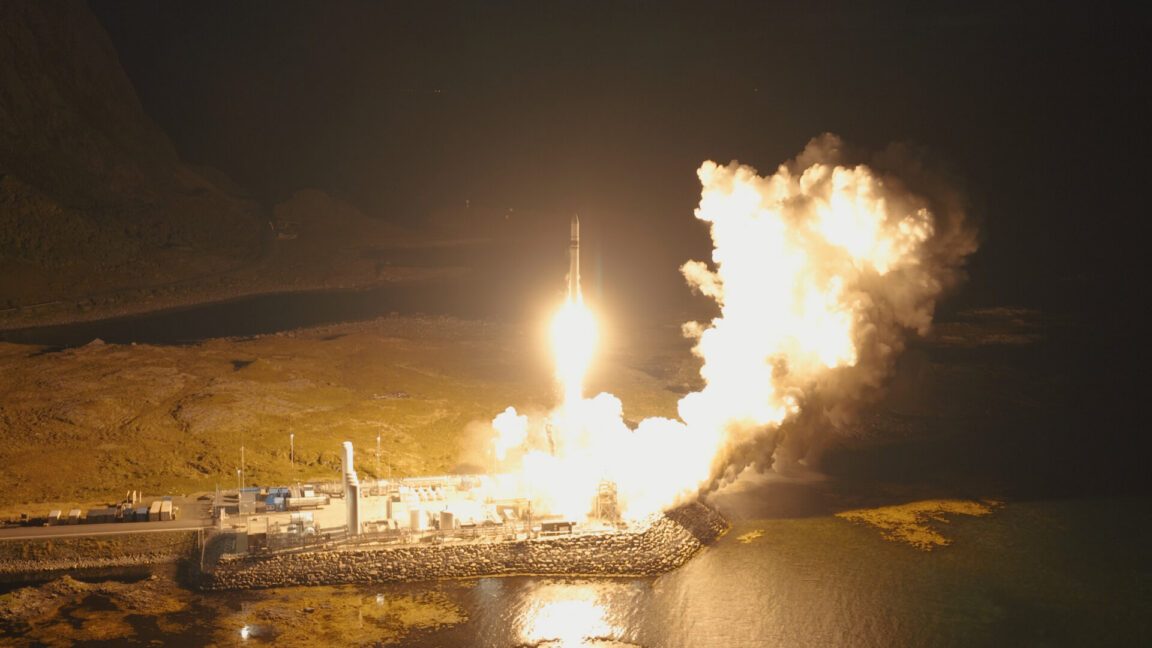
In a significant leap for European space capabilities, German company Isar Aerospace has achieved a groundbreaking milestone. On Saturday, their privately developed rocket, named Spectrum, successfully lifted off from the Andøya Spaceport in Norway, marking the first time a fully commercial orbital launch vehicle from continental Europe has reached low-Earth orbit. This achievement is not just a technical triumph but also a strategic one, potentially reshaping the landscape of space access for European businesses and institutions.
Key Details
- Company: Isar Aerospace, founded in 2018 by students from the Technical University of Munich.
- Rocket: Spectrum, a two-stage, 92-foot-tall (28-meter) launch vehicle.
- Mission: Successful launch into low-Earth orbit.
- Launch Site: Andøya Spaceport, located within the Arctic Circle in northern Norway.
- Launch Time: 4:12 pm EST (20:12 UTC) on Saturday.
- Time to Orbit: Approximately seven minutes.
- Significance: First fully commercial orbital launch from continental Europe.
Background
Isar Aerospace was established in 2018 by Daniel Metzler, Josef Fleischmann, and Markus Brandl, who began their journey tinkering with rocket components in a university workshop. Their ambition was to address what they identified as a critical bottleneck in the global space industry: reliable and cost-effective access to orbit. The company's success with the Spectrum rocket is the culmination of years of dedicated research, development, and testing, aiming to provide a much-needed alternative to existing launch services, particularly for commercial and institutional customers within Europe.
Impact Analysis
The successful orbital insertion of the Spectrum rocket positions Isar Aerospace as a frontrunner among European launch startups. The European space sector has long sought greater autonomy and competitiveness in launch services, often relying on international providers or facing delays with established, but less agile, programs. Isar’s achievement provides a tangible solution, offering sovereign access to space from continental Europe. This could significantly reduce lead times and costs for satellite deployment, fostering innovation and enabling a new wave of space-based applications and services.
“Today, Isar Aerospace opened space from continental Europe,” said Daniel Metzler, the company’s co-founder and CEO, in a press release. “Launch continues to be the largest bottleneck for the global space industry and from today on, there is a true alternative for commercial and institutional customers.”
Broader Context
The global space industry is experiencing unprecedented growth, driven by the proliferation of small satellites for communication, Earth observation, and scientific research. This surge in demand has created a competitive market for launch providers. While established players like SpaceX and Arianespace have dominated, a new generation of startups, particularly in Europe, are emerging with innovative solutions. Isar Aerospace's success injects vital competition into this market, challenging the status quo and potentially driving down costs across the board. It also aligns with broader European ambitions for strategic autonomy in space, reducing reliance on non-European launch capabilities.
Future Outlook
With the Spectrum rocket now proven in orbit, Isar Aerospace is poised to scale its operations rapidly. The company has indicated a focus on increasing production capacity to meet an existing order pipeline and capitalize on surging global demand. Future missions will likely involve deploying commercial and institutional payloads, solidifying their position as a reliable European launch provider. The success of Spectrum could also pave the way for further innovation in launch vehicle technology and operational efficiency within the company and the wider European space ecosystem.
Conclusion
Isar Aerospace's historic launch of the Spectrum rocket represents a pivotal moment for European spaceflight. By achieving the first fully commercial orbital launch from continental Europe, the company has not only demonstrated its technical prowess but also addressed a critical market need. This success story, born from entrepreneurial spirit and technical expertise, promises to enhance Europe's access to space, foster innovation, and strengthen its competitive position in the rapidly evolving global space economy.
Source: arstechnica.com