Beatrice Gibson's 'At Night' Explores the Fragmentation of Womanhood
Introduction
Beatrice Gibson’s directorial debut, ‘At Night’, emerges as a profound cinematic exploration of female identity, drawing inspiration from Alice Notley’s seminal feminist poem, ‘The Descent of Alette.’ Eschewing traditional narrative structures, Gibson crafts a film that is less an adaptation and more a continuation of Notley’s radical exploration of language and self. The film opens with a stark, spoken-word declaration attributed to Notley: “I am a tone of voice.” This sets the stage for a work that prioritizes sonic and visual texture over conventional storytelling, challenging the very notion of a singular, unified female experience.
Key Details
- Inspiration: Alice Notley’s feminist epic poem ‘The Descent of Alette’ and Kathy Acker’s ‘Don Quixote.’
- Director: Beatrice Gibson, known for her previous work incorporating the words of poets like CA Conrad and Eileen Myles.
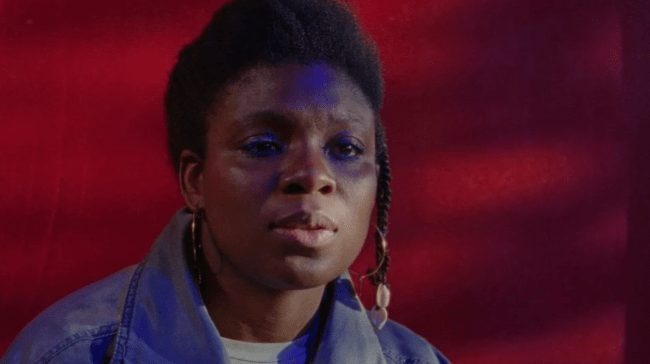
- Cast: Features Beatrice Gibson as ‘B,’ Diocouda Diaoune as ‘Didi,’ and a chorus of six non-professional actresses portraying diverse women.
- Cinematography: Shot by Ben Rivers, with a focus on nocturnal urban landscapes and intimate, handheld camera work.
- Sound Design: Utilizes ambient field recordings, Elvin Brandi’s score, and a notable performance by queer artist Adam Christensen (Madam).
- Themes: Explores the fragmentation of womanhood, racial and class disparities, reproductive health, sexuality, and the search for connection amidst societal divisions.
- Screenings: Premiered at the Locarno Film Festival and screened at the 2026 Toronto International Film Festival. Currently seeking U.S. distribution.
Background
Gibson’s artistic practice has consistently engaged with the intersection of poetry and visual media. Her previous projects have featured the voices of prominent poets, establishing a pattern of using literary texts as springboards for cinematic interpretation. ‘At Night’ continues this trajectory, with Notley’s complex poem serving as a foundational text. The film’s title itself, ‘At Night,’ evokes a sense of liminality and introspection, mirroring the nocturnal settings that dominate the visual landscape. The choice to draw from both Notley and Acker suggests a deliberate engagement with feminist literary traditions that are both experimental and challenging.
Impact Analysis
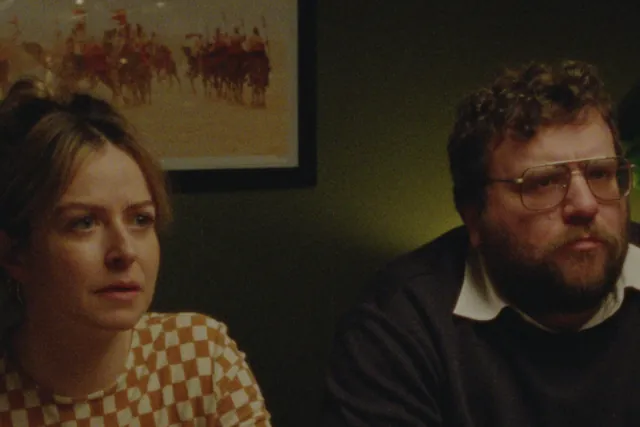
The film’s central thesis is the refutation of monolithic womanhood. Gibson deliberately populates her film with a diverse ensemble of women—artists, psychologists, mothers, immigrants, sex workers—each bringing their unique lived experiences to the fore. The pivotal ten-minute restaurant scene, where these women engage in candid conversations about their sex lives, reproductive health, and the intersection of race, class, and gender, serves as the film’s emotional and thematic core. The handheld camera, often lagging slightly behind the conversation, imbues the scene with a sense of spontaneous authenticity, reminiscent of documentary filmmaking. This approach underscores Gibson’s commitment to capturing the nuanced realities of female existence, moving away from idealized or generalized portrayals.
“You think you win, and you think I lose…but I don’t see the point of playing a game where you’re always winning.”
This powerful statement, delivered by Didi to B, encapsulates the film’s critique of societal structures that pit women against each other and create false dichotomies of success and failure. The film avoids easy resolutions or reconciliations, instead forcing characters and the audience to confront uncomfortable truths about inequality and the complexities of human relationships. The inclusion of Adam Christensen, an openly queer artist performing under the alter ego Madam, further complicates and enriches the film’s exploration of gender, challenging conventional boundaries and highlighting Gibson’s inclusive vision.
Broader Context
‘At Night’ arrives at a moment when discussions surrounding gender identity, intersectionality, and feminist theory are at the forefront of cultural discourse. Gibson’s film contributes to this conversation by offering a visual and artistic interpretation of these complex ideas. By focusing on the lived experiences of a diverse group of women, the film implicitly critiques societal norms that attempt to homogenize female identity. The visual style, characterized by Ben Rivers’ evocative nocturnal cinematography, transforms ordinary urban spaces into sites of hidden beauty and introspection, reflecting the internal landscapes of the characters. The film’s soundscape, a rich tapestry of ambient noise, musical scores, and spoken word, further immerses the viewer in this world, emphasizing the sensory and emotional dimensions of the characters’ lives.
Future Outlook
Having premiered at prestigious festivals like Locarno and TIFF, ‘At Night’ is poised to make a significant impact on the independent film circuit. Its current pursuit of U.S. distribution suggests a desire to reach a wider audience and engage in broader cultural conversations. The film’s unconventional approach and its challenging themes are likely to spark debate and critical analysis, solidifying its place as a notable work of feminist cinema. Gibson’s debut signals a promising new voice in filmmaking, one that is unafraid to tackle complex subjects with artistic rigor and a deep sense of empathy.
Conclusion
‘At Night’ is a bold and introspective debut that challenges viewers to reconsider the multifaceted nature of womanhood. Beatrice Gibson masterfully weaves together poetry, visual art, and raw human experience to create a film that is both intellectually stimulating and emotionally resonant. By refusing to offer easy answers or monolithic representations, Gibson invites us to embrace the contradictions and complexities that define individual lives. The film stands as a testament to the power of cinema to explore the nuances of identity and the enduring search for connection in an often-fragmented world.
Source: indiewire.com