Astrology's Enduring Appeal and the Science of Spaceflight: New Books Explore History and Mystery
Introduction
The intersection of science and belief, the dedication of pioneering medical researchers, and the fundamental principles governing our universe are perennial subjects of fascination. Recent book releases offer compelling narratives that revisit these themes, challenging conventional wisdom and shedding new light on historical figures and scientific endeavors. From the unexpected astrological pursuits of 17th-century astronomers to the life-saving impact of Albert Sabin’s polio vaccine and the complex physics behind space travel, these works invite readers to explore the enduring mysteries of the cosmos and the human drive to understand it.
Key Details
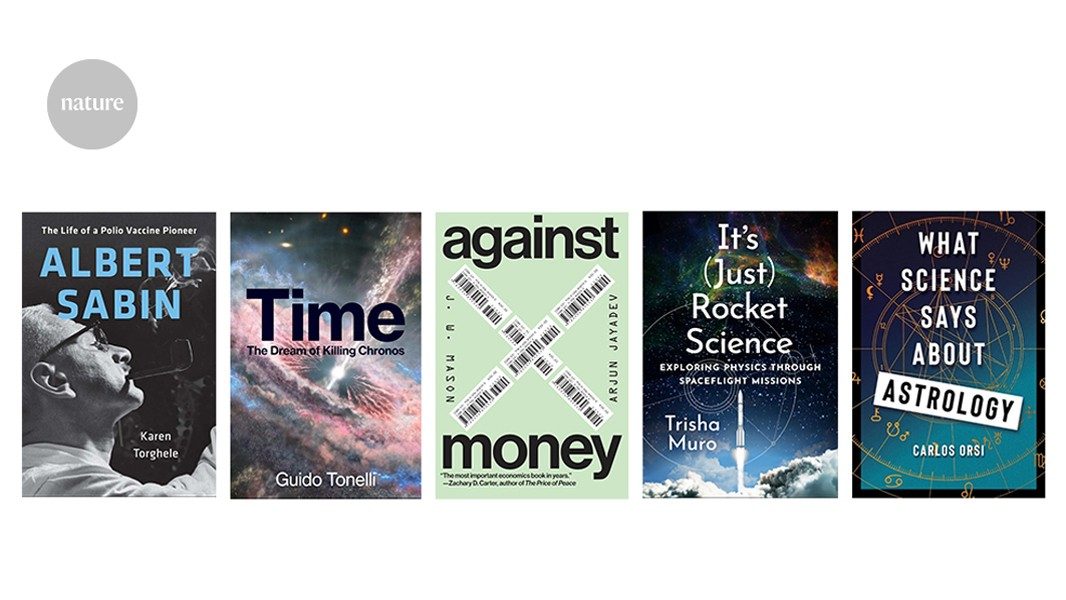
- Astrology and Science: Science writer Carlos Orsi’s book examines the historical relationship between astrology and science, noting that while astrology was once considered alongside astronomy, it was relegated to pseudoscience during the Enlightenment. Despite this, its global market value was estimated at US$12.8 billion in 2020, with modern practitioners often focusing on explaining the past rather than predicting the future.
- Albert Sabin’s Polio Vaccine: Epidemiologist Karen Torghele’s biography celebrates Albert Sabin, the physician-researcher behind the oral polio vaccine that enabled mass immunization starting in 1961. Torghele details Sabin’s “abrasive” yet effective personality and highlights that he “never sold or profited from” his vaccine, contrasting with Jonas Salk’s earlier injectable version.
- Physics of Space Flight: Science writer Trisha Muro’s book, aimed at enthusiasts, demystifies the physics of space flight. Inspired by the Challenger disaster investigation, Muro explains basic principles and the challenges of deep space missions like Voyager, drawing parallels between historical astronomers and contemporary space exploration questions.
- Economic Theories: A book by J. W. Mason and Arjun Jayadev, titled “Against Money,” is also noted, suggesting an exploration of economic principles or critiques.
Background
The historical perspective on astrology is particularly intriguing. Figures like Galileo Galilei and Johannes Kepler, giants of early modern astronomy, were also active practitioners of astrology. This practice, deeply intertwined with celestial observation for centuries, was gradually separated from empirical science during the Age of Enlightenment. As scientific methodologies became more rigorous and evidence-based, astrology was increasingly categorized as a pseudoscience. Yet, its persistent popularity, evidenced by a multi-billion dollar global market, suggests a deeper human need for meaning and narrative that science alone may not always fulfill. Carlos Orsi’s work delves into this complex legacy, exploring how contemporary astrologers navigate this historical divide.
In the realm of public health, the development of the polio vaccine stands as a monumental achievement. While Jonas Salk’s injectable vaccine, introduced in 1955, was a critical breakthrough, it was Albert Sabin’s oral vaccine, distributed from 1961, that truly facilitated widespread, easily administered mass immunization campaigns. Sabin’s contribution was not driven by personal profit; Karen Torghele’s biography emphasizes his commitment to public health, noting his lack of financial gain from his life-saving invention. This dedication, coupled with his formidable personality, makes for a compelling biographical study.
Impact Analysis
The impact of Albert Sabin’s work cannot be overstated. The oral polio vaccine dramatically reduced the incidence of paralytic poliomyelitis worldwide, saving millions of lives and preventing countless disabilities. Its ease of administration made it ideal for global vaccination efforts, particularly in developing nations. Torghele’s biography provides a detailed account of the scientific rigor and personal drive behind this public health triumph. Similarly, Trisha Muro’s exploration of space flight physics highlights the profound impact of scientific understanding on technological advancement. By making complex concepts accessible, her book aims to foster greater public appreciation for the engineering marvels that enable humanity’s reach into the cosmos, from planetary exploration to the ongoing quest for knowledge about our universe.
Broader Context
These books collectively touch upon humanity’s enduring quest for knowledge and meaning. The continued fascination with astrology, even in a scientifically advanced age, speaks to the human desire for understanding our place in the universe and interpreting life’s events. It exists in a broader cultural context where personal narratives and spiritual beliefs often coexist with, or even challenge, scientific explanations. The stories of Sabin and the pioneers of space exploration, on the other hand, exemplify the power of scientific inquiry, collaboration, and perseverance to solve critical problems and expand our horizons. They represent a different facet of human endeavor—one focused on empirical discovery and tangible progress.
Future Outlook
The ongoing scientific exploration of space, as discussed in Muro’s book, continues to push the boundaries of our knowledge, posing new questions that echo those of early astronomers like Brahe, Kepler, and Galileo. The development of new vaccines and medical treatments, inspired by figures like Sabin, remains a critical area of research, promising further advancements in global health. While astrology’s scientific validity remains debated, its cultural persistence suggests it will continue to occupy a unique space in public consciousness. Future works may further explore the psychological and sociological reasons behind its enduring appeal, or perhaps uncover new, unexpected connections between seemingly disparate fields of human thought.
Conclusion
The reviewed books offer diverse yet interconnected insights into human curiosity, scientific achievement, and the complex relationship between belief and evidence. They remind us that history is often more nuanced than it appears, with renowned scientists engaging in practices now deemed unscientific, and that monumental public health victories can stem from dedicated individuals who prioritize collective well-being over personal gain. Furthermore, they underscore the fundamental nature of scientific inquiry, from understanding the mechanics of the universe to unraveling the challenges of space travel. These narratives collectively enrich our understanding of the past and illuminate the ongoing human journey of discovery.
Source: nature.com