Ancient 'Supervolcano' Unearthed in Eastern England, Experts Debate Classification
Introduction
An immense volcanic structure, estimated to be 454.4 million years old, has been identified beneath the eastern English counties of Norfolk and Lincolnshire. While the discovery confirms a period of intense geological activity, the classification of this ancient behemoth as a 'supervolcano' is a subject of debate among volcanologists. The eroded remnants of what was once a vast caldera system present a challenging puzzle for scientists seeking to understand its true scale and explosive power.
Key Details
- Age: The volcano is dated to 454.4 million years old, with evidence of an earlier eruption at 453.7 million years ago.
- Location: The caldera system lies beneath Norfolk and Lincolnshire in eastern England.
- Evidence: Analysis of zircon crystals, collected decades ago from boreholes, revealed a match with the Kinnekulle tephra found across Scandinavia and the Baltic region.
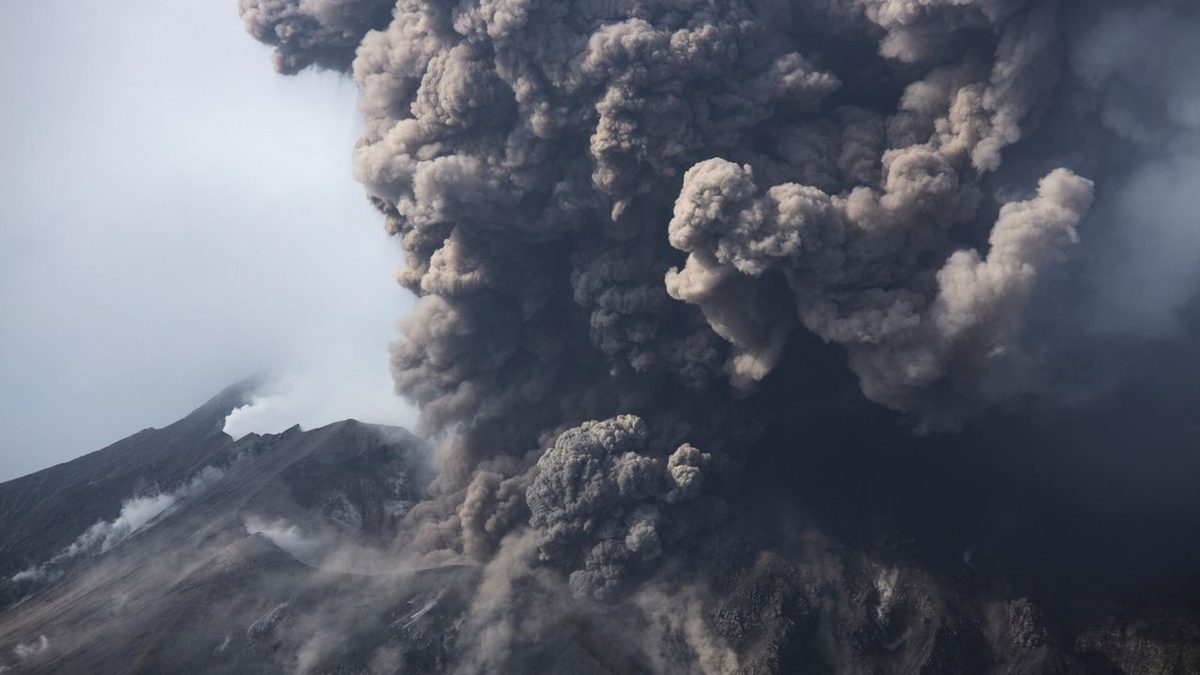
- Eruption Scale: The findings suggest the volcano produced at least one massive eruption, evidenced by ash deposits found hundreds of miles away. This event is described by some experts as an 'ultraplinian eruption'.
- Classification Debate: While the eruption was undoubtedly powerful, some geologists hesitate to label it a 'supervolcano' due to the difficulty in calculating precise eruption volumes from the eroded and poorly preserved deposits.
- Publication: The analysis was published in the Geological Society of America Bulletin.
Background
The identification of this ancient volcano is the result of meticulous, decades-long research. Scientists examined zircon crystals, microscopic mineral grains that form within magma and contain radioactive uranium, which decays into lead at a predictable rate. By dating these crystals, researchers can accurately pinpoint the timing of volcanic eruptions. The zircon samples, extracted from boreholes located 40 miles (65 kilometers) apart, provided a crucial link between eastern England and the widespread Kinnekulle tephra layer. This tephra, known to be the product of a colossal eruption, covers large parts of Scandinavia and the Baltic. The new analysis demonstrates the vast reach of the ash plume, indicating that the eruption from the English volcano dispersed its ejecta across the ancient Tornquist Sea, a body of water that existed during the Ordovician period.
Impact Analysis
The implications of this discovery are significant for understanding the geological history of the British Isles and Northern Europe. The scale of the eruption, inferred from the widespread ash deposits, suggests an event of immense power. Experts describe such an event as an 'ultraplinian eruption', capable of ejecting over 240 cubic miles (1,000 cubic kilometers) of material. These eruptions are characterized by towering ash clouds, potentially reaching heights of over 25 miles (40 km) into the stratosphere, and lasting for days or even weeks. The force unleashed would have been equivalent to thousands of atomic bombs. However, the term 'supervolcano' itself is a point of contention. Volcanologists often prefer more precise terminology, such as 'ultraplinian', which focuses on the volume of ejected material rather than a potentially ambiguous label. The significant erosion and burial of the volcanic deposits make it challenging to ascertain the exact volume of material expelled, leading to reservations about the 'supervolcano' designation.
“It obviously must have been a very large eruption, but it would be very difficult to calculate the volume of the eruption given the poor preservation of the deposits,” stated Michael Poland, a research geophysicist. “This is part of the reason I really hate the term 'supervolcano.'”
Broader Context
The ancient volcano in eastern England is not an isolated phenomenon. It is understood to be part of a larger volcanic system that was active around 450 million years ago. This system included significant volcanic centers in what is now Eryri National Park in Wales and the Lake District in northwestern England. These discoveries highlight a period of intense volcanic activity across the region during the Ordovician period. Modern geological interpretation often involves piecing together evidence from deformed and altered rock formations, rather than finding intact volcanic structures. Researchers focus on identifying eruption deposits and understanding the subterranean magma reservoirs that fed these ancient giants. The landscape of eastern England, now characterized by its flatness, belies its fiery past.
Future Outlook
Further research will likely focus on refining the understanding of the eruption's volume and impact. While the current evidence points to a massive event, the vagaries of geological preservation mean that a definitive 'supervolcano' classification may remain elusive. Scientists will continue to employ advanced dating techniques and geological modeling to reconstruct the past. The study, led by Tim Pharaoh of the British Geological Survey, emphasizes the importance of re-examining historical geological samples with modern analytical tools. The ongoing exploration of England's subsurface may reveal more about its ancient volcanic heritage and its role in shaping the region's geology.
Conclusion
The discovery of a 454.4 million-year-old volcanic system beneath eastern England is a significant geological finding. It provides compelling evidence of an ultraplinian eruption that distributed ash across a vast area. However, the scientific community's reluctance to universally adopt the 'supervolcano' label underscores the importance of precise terminology and rigorous evidence in geology. While the volcano's power is undeniable, the eroded state of its remnants means that its precise classification remains a subject for ongoing scientific discussion and further investigation.
Source: livescience.com